Backed by a Lifetime Motor Warranty.
.svg)


In the competitive hospitality and retail landscape of Tampa Bay, outdoor dining is no longer a luxury—it is a primary revenue driver. From the bustling waterfront venues on Harbour Island and the St. Pete Pier to the trendy hotspots in Water Street Tampa, Hyde Park, and downtown Sarasota, a vibrant outdoor patio is a major draw. Customers naturally gravitate toward al fresco dining, wanting to pair their meals with fresh coastal air, beautiful sunsets, and a lively atmosphere.
However, operating a commercial patio in Florida comes with significant climate challenges. The same sun that attracts tourists can quickly make outdoor seating areas completely unusable. Blistering afternoon heat, blinding glare, sudden tropical downpours, high humidity, and swarming insects routinely force restaurant managers to close off their patios, leading to lost revenue, frustrated guests, and chaotic table-management situations.
Commercial motorized screens solve these operational bottlenecks. By transforming vulnerable, weather-dependent patios into comfortable, highly adaptable environments, restaurant and business owners can keep their outdoor seating active and profitable every day of the year.
For a hospitality venue, every seat represents a concrete dollar value. When a portion of your dining space becomes unusable due to weather, your bottom line takes an immediate hit.
Consider a typical Tampa Bay restaurant with an outdoor patio of 15 tables averaging 4 seats each — 60 dining seats that turn several times during a busy weekend lunch or dinner shift.
If a sudden 3:00 PM thunderstorm sweeps through, or if the afternoon heat rises to an unbearable level, those 60 seats must be closed. Not only does the restaurant lose a full shift of patio revenue, but staff are also forced to scramble to accommodate patio guests inside an already packed dining room. This creates long wait times, degrades the guest experience, and strains kitchen and service staff.
By installing high-performance retractable screens, businesses eliminate this vulnerability. The patio transforms from a seasonal gamble into reliable, climate-controlled square footage that operates predictably through summer heat waves, autumn storms, and breezy winter nights.
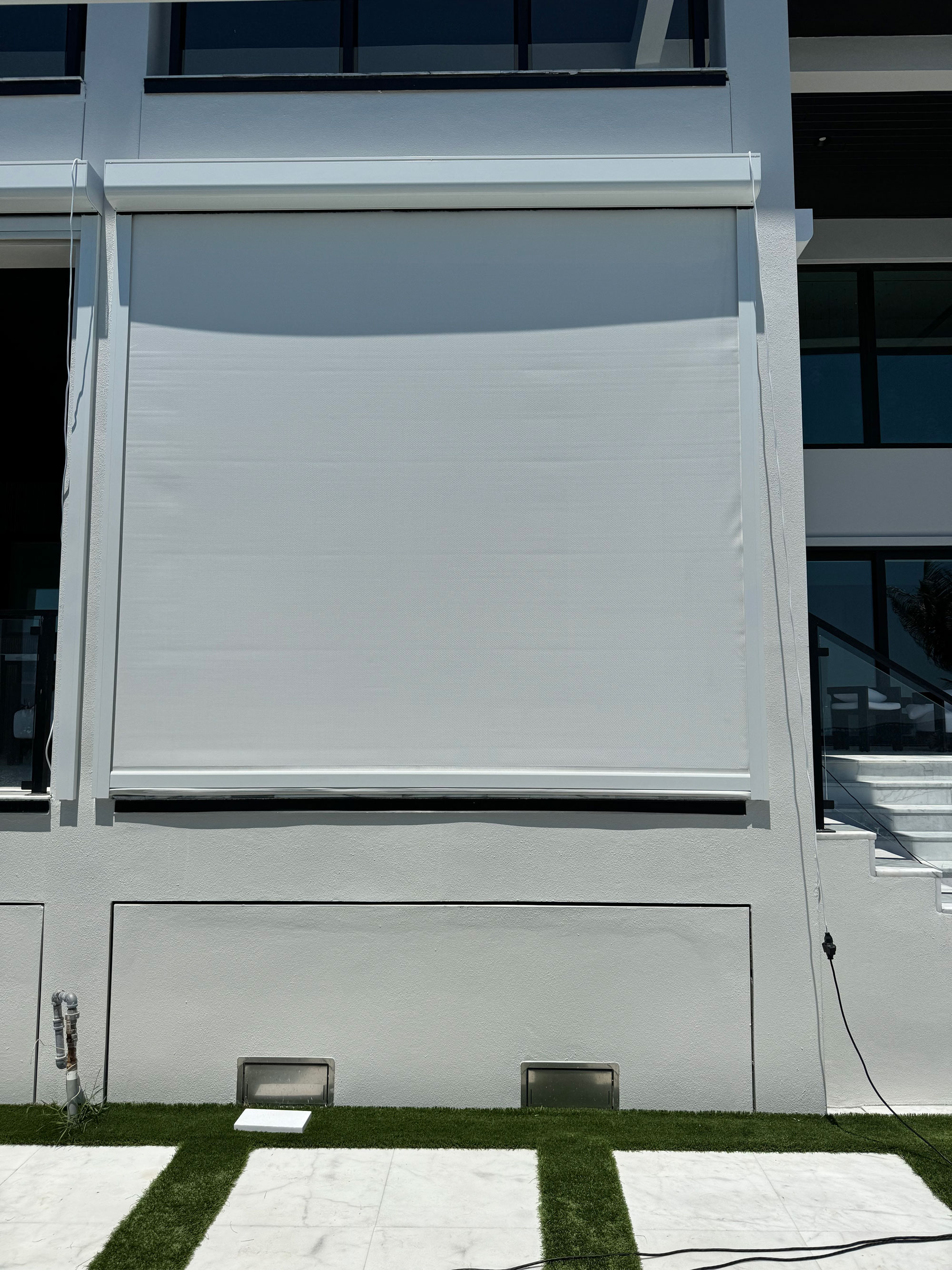
Custom motorized screens address multiple environmental challenges simultaneously, providing a versatile shield that adapts to changing conditions throughout the business day.
+-----------------------------------------------------------------------+
|                    Commercial Patio Environmental Control             |
+-----------------------------------------------------------------------+
|   [ Direct & Reflected Heat ]         [ Wind & Driving Rain ]         |
|   - Blocks up to 95% of solar energy   - Creates a durable barrier    |
|   - Keeps patio spaces up to 15° cooler- Shields guests from downpours |
|                                                                       |
|   [ Daytime Privacy & Contrast ]      [ Pest & Insect Defense ]       |
|   - Reduces blinding water glare      - Sealed zipper-lock system     |
|   - Enhances luxury roadside appeal   - Keeps out mosquitoes & midges  |
+-----------------------------------------------------------------------+
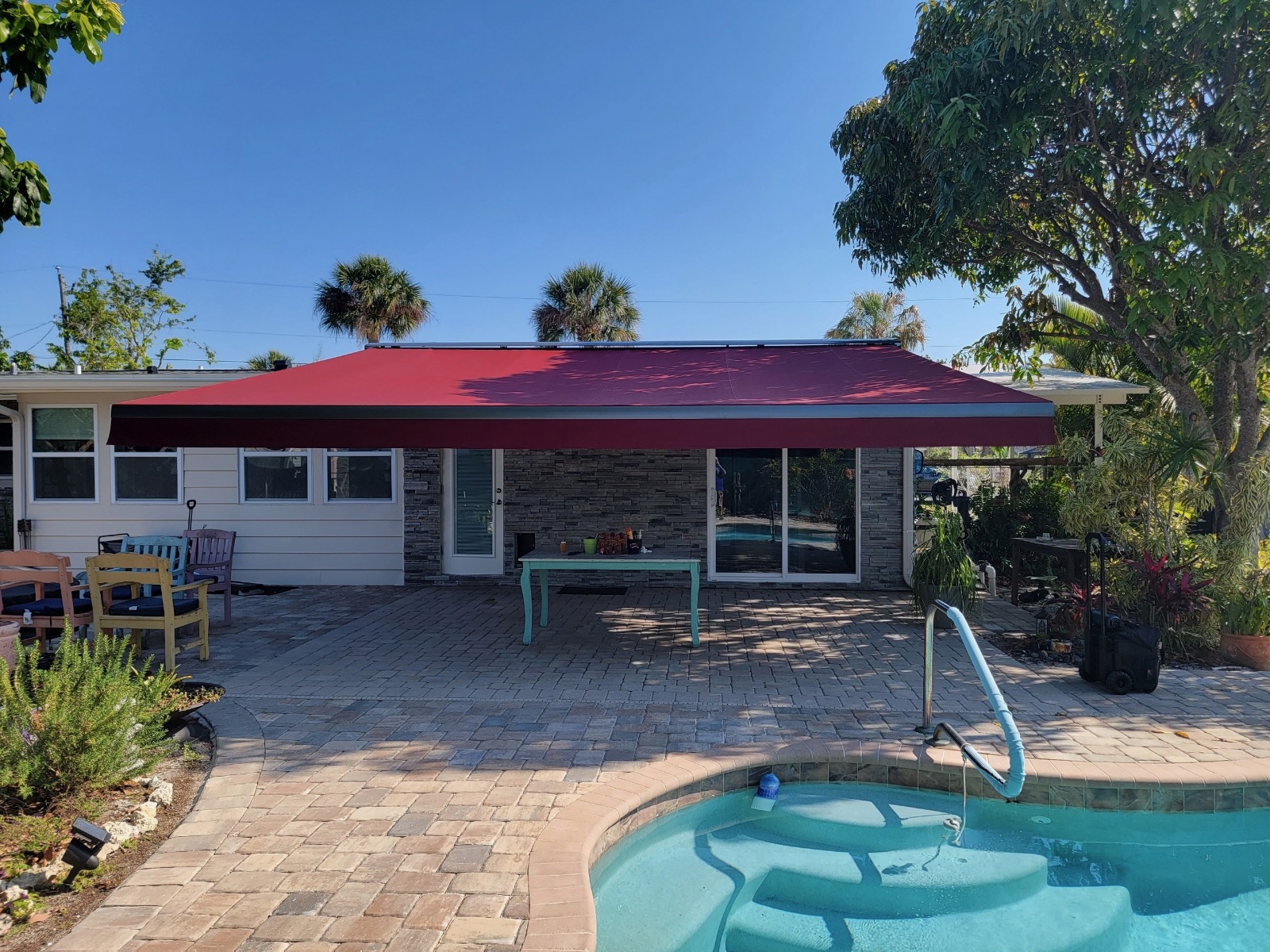
Florida's summer afternoon temperatures routinely climb into the 90s, with concrete decks and brick pavers trapping and radiating that heat back upward. When motorized screens are deployed, they intercept solar radiation before it enters the seating area, dropping ambient patio temperatures by up to 15 degrees.
This thermal barrier allows outdoor ceiling fans, misting systems, or localized air conditioning units to operate far more efficiently. Instead of battling raw, open sunlight, your cooling systems only need to manage a shaded, semi-enclosed microclimate, ensuring guest comfort even during mid-July afternoons.
The Tampa Bay region is notorious for sudden, violent summer microbursts. A heavy downpour can blow rain sideways across a patio in seconds, soaking upholstery, ruining meals, and damaging expensive outdoor televisions or sound systems.
Commercial motorized screens feature robust, track-guided tension systems that keep the fabric taut. When lowered, they act as an effective wind and rain break. Instead of closing down the patio at the first sign of rain, staff can simply lower the screens, allowing guests to continue enjoying their meals in complete comfort while watching the storm pass outside.
At dusk, pests like mosquitoes, flies, and biting midges (no-see-ums) emerge, especially near waterfront properties on the bay, rivers, or canals. Traditional fixed screen enclosures solve this problem but permanently block views and trap heat.
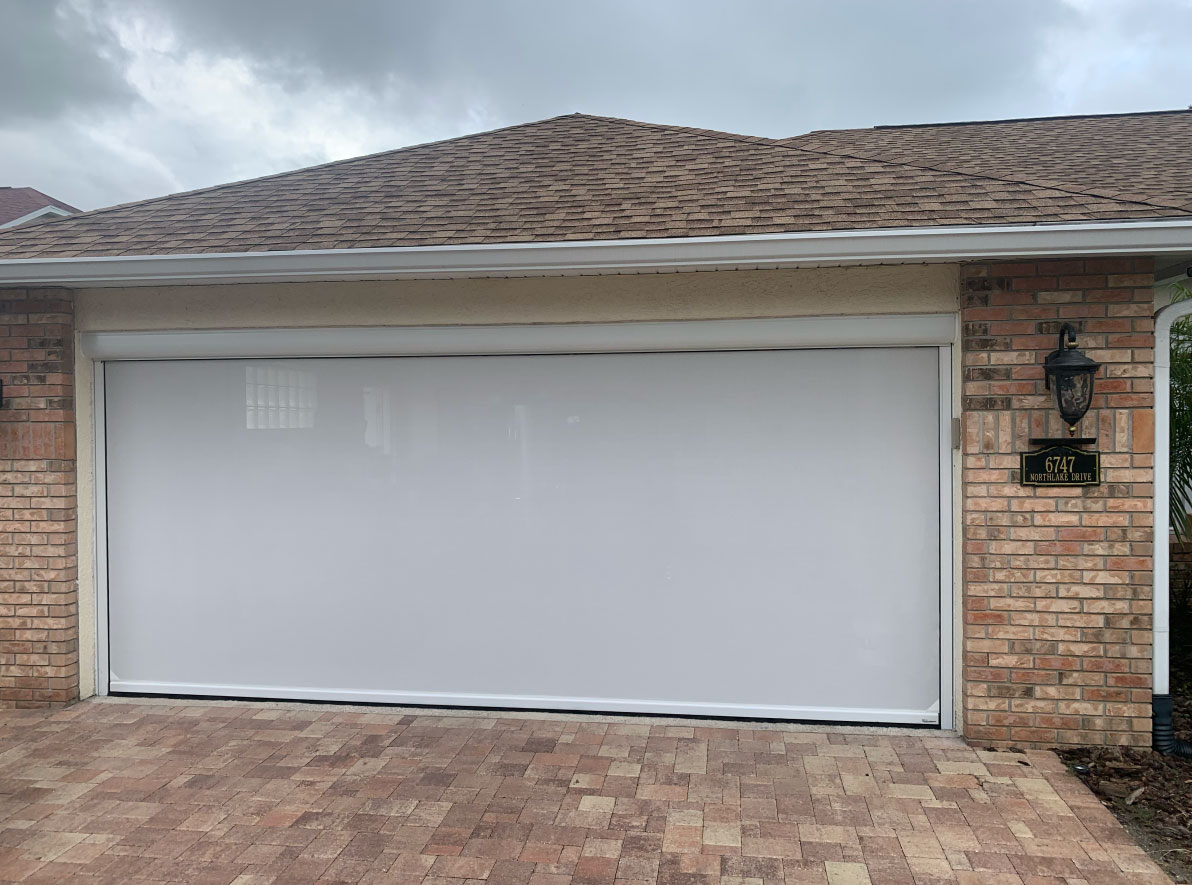
Motorized screens offer a superior, dynamic alternative. They can remain fully retracted during the breezy, bug-free morning hours and deploy seamlessly as the sun sets and insects begin to swarm. This on-demand protection ensures your dinner service remains completely undisturbed.
When looking to optimize an outdoor commercial space, business owners often debate whether to install fixed structures (like solid walls or permanent window panels) or dynamic, retractable systems.
While solid structures provide permanent protection, they also permanently alter the venue's aesthetic, limit airflow, and eliminate the open-air dining experience that customers actively seek when the weather is beautiful.
+---------------------------------------------------------------------+
|              Fixed vs. Retractable Commercial Comparison            |
+---------------------------------------------------------------------+
|  Feature                | Fixed Enclosures     | Retractable Screens|
|-------------------------|----------------------|--------------------|
|  Open-Air Dining        | Permanently Lost     | Preserved On-Demand|
|  Airflow Control        | Limited/Static       | Fully Adjustable   |
|  Weather Protection     | Continuous           | Instant Deployment |
|  Architectural Appeal   | Can Look Bulky       | Sleek & Concealed  |
|  Local Permit Demands   | High & Complex       | Low & Streamlined  |
+---------------------------------------------------------------------+
Investing in dynamic, retractable screens gives your business the ultimate flexibility. When comparing fixed vs. retractable awnings for homes and businesses, the major advantage of a retractable system is its ability to adapt.
On a perfect spring afternoon, your patio can be completely open to the coastal breeze. When the heat rises or storm clouds gather, the screens can be deployed to protect the space within seconds, giving you the best of both worlds.
To maximize the return on your shading investment, your patio layout must be planned strategically. Rather than simply throwing up a single giant screen across your building's exterior, successful commercial designs focus on zoning and spatial functionality.
When configuring a high-traffic dining space, utilizing outdoor dining comfort shade layouts that work is essential for maintaining smooth traffic patterns and comfortable seating zones.
A well-designed commercial layout will incorporate several key strategies:
Commercial patios demand a much higher level of durability, safety, and performance than standard residential backyards. When sourcing motorized screen systems for a business, several technical specifications must be prioritized.
Because commercial patios are often located in open waterfront zones or high-density urban areas that experience strong wind-tunnel effects, standard hanging fabrics are highly susceptible to damage. To prevent fabric blowouts and noisy rattling, commercial installations must utilize advanced tracking technologies.
The industry standard for commercial durability is a zipper-lock tracking system. In these setups, a heavy-duty zipper bead is welded directly to the vertical edges of the screen fabric. This bead is locked continuously inside a specialized PVC inner channel housed within the aluminum side rails.
This continuous connection distributes wind load pressures evenly down the entire length of the vertical rails. If you are researching tracking options for a windy location, review our guide on the best stabilization for motorized screens to understand how these systems maintain structural integrity.
The fabric you choose dictates how much heat, light, wind, and pests enter your dining space. Commercial fabrics must be highly durable, fade-resistant, mold-resistant, and easy to clean.
+-----------------------------------------------------------------------+
|                    Selecting the Ideal Commercial Fabric              |
+-----------------------------------------------------------------------+
|  [ Solar Screen: 5% - 10% Open ]    [ Micro-Mesh: Insect Defense ]    |
|  - Drastically cuts solar heat gain  - Engineered to stop tiny midges |
|  - Blocks blinding sunlight glare    - Maintains maximum fresh airflow|
|  - Retains clear views of the bay    - Ideal for waterfront dining    |
+-----------------------------------------------------------------------+
For restaurants sitting directly on saltwater canals, harbors, or tidal rivers, microscopic pests present a major challenge. Standard bug screens are completely ineffective against Florida's tiny biting midges.
If your venue is located in a high-pest coastal zone, reading our guide on choosing mesh for bugs: no-see-ums to mosquitoes will help you select a specialized, high-density weave that stops tiny biting pests without completely blocking the refreshing coastal breeze.
While the upfront cost of commercial motorized screens is a significant investment, the long-term return on investment (ROI) is substantial and easily measurable.
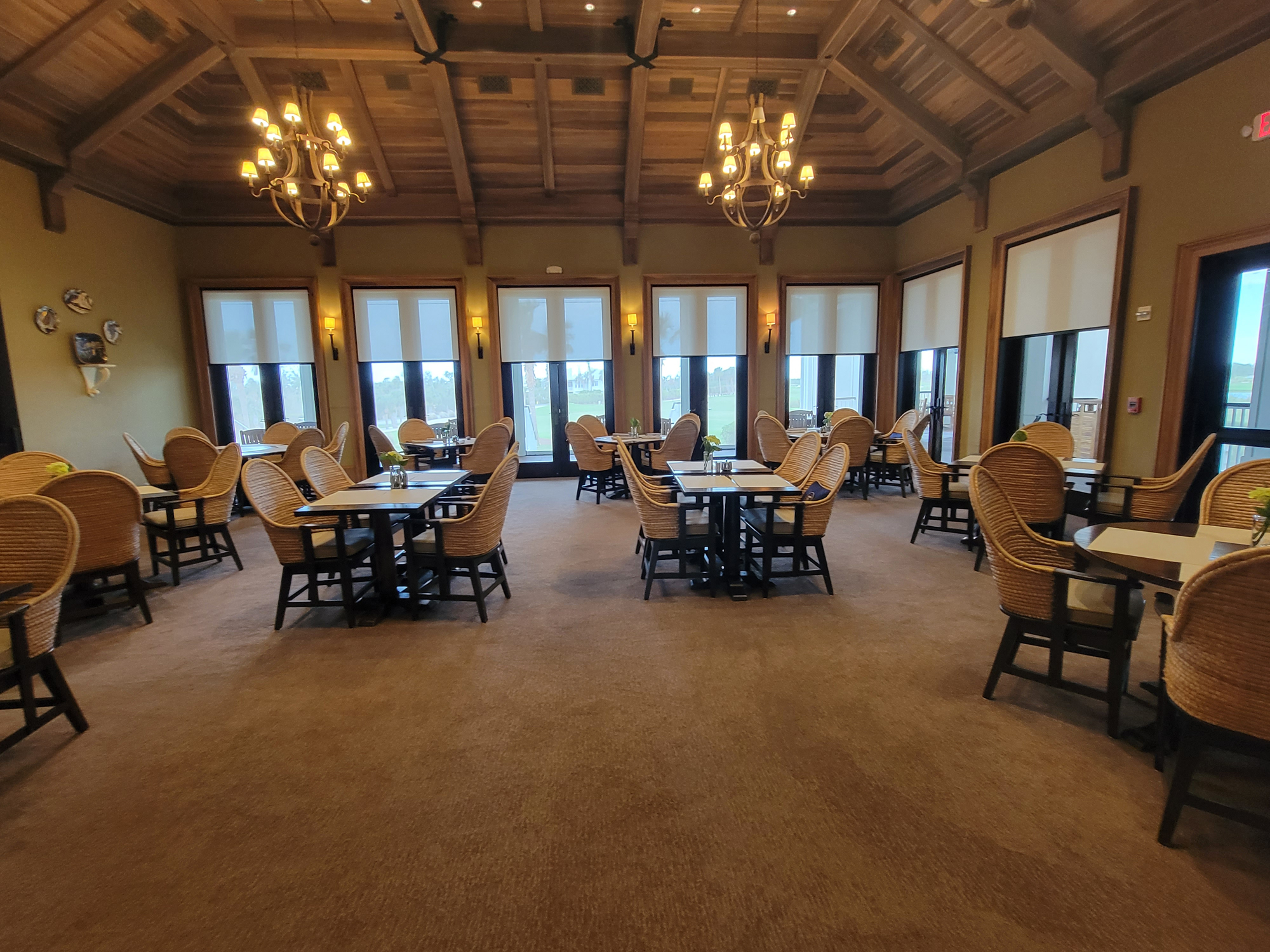
When raw sunlight strikes large commercial glass doors or dining room windows, it creates a massive greenhouse effect, forcing your building's interior air conditioning systems to run continuously to keep guests comfortable.
By deploying exterior screens over your building's glass surfaces during peak solar hours, you intercept that thermal energy before it ever touches your glass. To learn how much this simple barrier can save your business on monthly utility bills, explore our analysis of the energy savings with exterior shades in hot climates.
When seats are comfortable, table turn velocity remains high and predictable. Instead of closing down tables during the scorching afternoon hours or losing revenue when a sudden summer downpour strikes, motorized screens keep every seat in your restaurant active.
This consistent capacity prevents guest backlogs, improves staff scheduling predictability, and ensures your kitchen can operate at peak volume throughout the day.
In a busy commercial environment, restaurant managers and waitstaff do not have the time to manually adjust multiple individual window shades throughout a hectic shift. Modern commercial motorized shade systems feature advanced smart control options to streamline daily operations:
Designing and installing a commercial motorized screen system that can withstand Florida's challenging climate requires precise planning and expert execution.
At West Shore Shade, we specialize in engineering high-performance, heavy-duty commercial motorized screens tailored to the unique architectural and environmental demands of Tampa Bay businesses.
Our experienced team manages every aspect of your commercial project, including:
Your outdoor patio is one of your business's most valuable assets, but its true revenue-generating potential can only be realized when you control the climate surrounding it. Leaving your outdoor dining seats exposed to punishing afternoon heat, blinding sun glare, sudden downpours, and swarming insects limits your capacity and hurts your bottom line.
By upgrading your restaurant or commercial property with advanced, track-guided motorized screens, you create a dynamic, versatile outdoor environment that effortlessly adapts to changing weather conditions.
Keep your outdoor seating open, comfortable, and profitable all year long. Contact the local commercial shading experts at West Shore Shade today to schedule your custom on-site consultation!
Free In-Home Estimate
Leave your name, phone and ZIP. Our local Gibsonton team will call to set up a free measure. No pressure, no obligation.
No pressure and no guesswork. One local team takes you from first call to final install.
Call (813) 252-6813 or send a quick form. Tell us what you want to shade and we will set a visit time that works for you.
We measure your space, bring real fabric and finish samples, and give you a detailed, no-obligation quote. Prefer to see it first? Walk into our Gibsonton showroom.
Our own crew installs. No subcontractors. Every job carries an itemized warranty, including a lifetime warranty on tubular motors.
Financing available through Enhancify. Serving Tampa Bay, Sarasota, Bradenton & Venice.
Seen something you like?
Every West Shore Shade quote is done in person, because every opening is different. Tap what you’re interested in and answer a few quick questions so we arrive prepared. A real person from our Gibsonton showroom calls to set up your free visit.
Custom-measured, professionally installed, and backed by a lifetime motor warranty. No pressure, no obligation — just a straight answer on what your space needs.
Call (813) 252-6813Pick your product, leave your number, and we'll call to set a time. No pressure, no obligation.
A West Shore Shade specialist will call you shortly to set your free in-home estimate. Need us sooner? (813) 252-6813
Prefer to talk? (813) 252-6813
“From the first consultation to final installation, the experience was seamless. Our Tampa patio now feels like a luxury retreat.”
“The motorized screens work flawlessly and look amazing. The team was professional, punctual, and so easy to work with.”
“The quality is top-notch and the installation was quick and clean. Highly recommend West Shore Shades.”