Backed by a Lifetime Motor Warranty.
.svg)


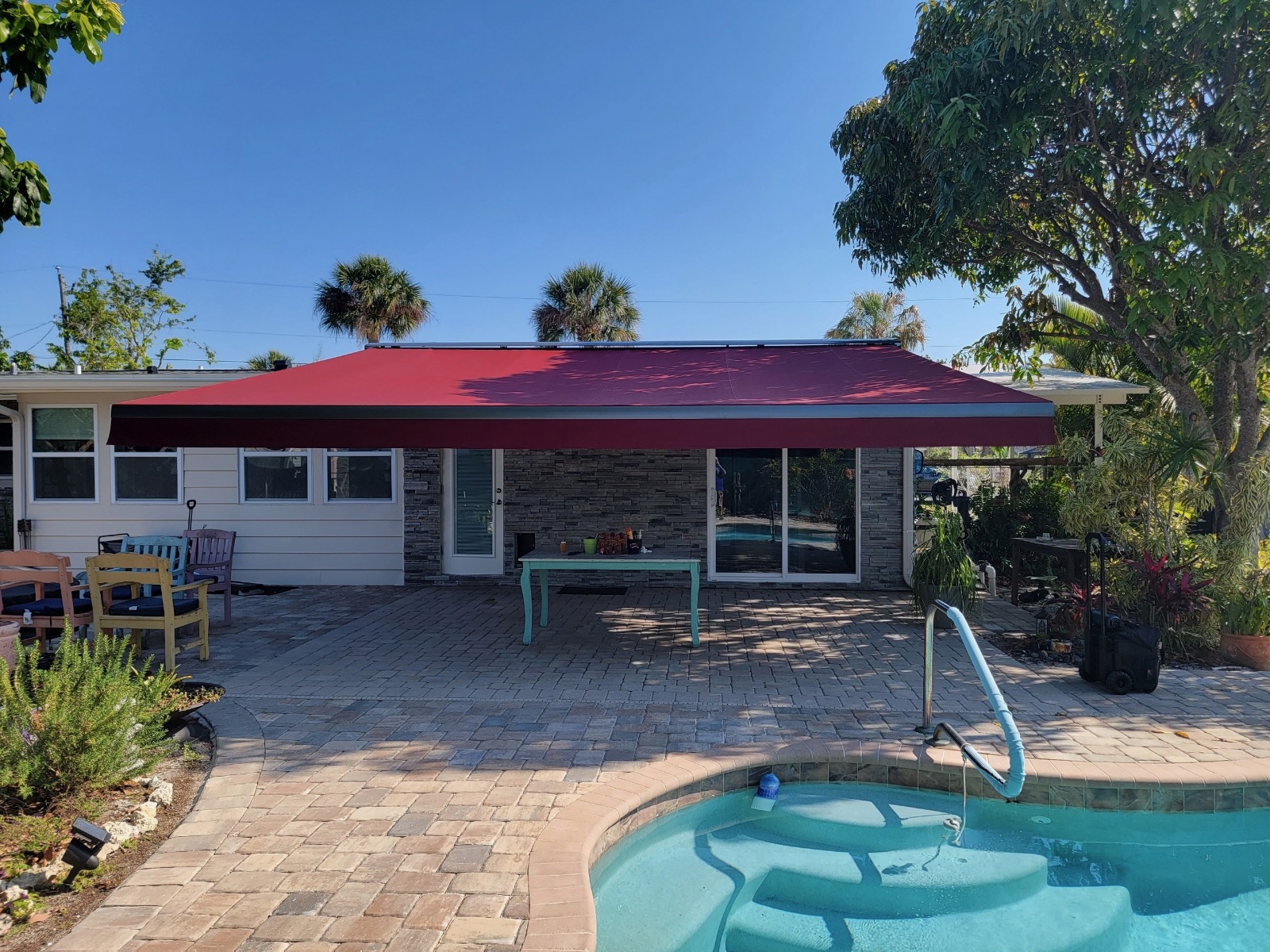
Investing in a premium retractable awning is one of the most rewarding upgrades you can make for your Tampa Bay home. An awning instantly converts an exposed patio, deck, or poolside lanai into a comfortable, shade-rich outdoor sanctuary. It lowers outdoor surface temperatures, protects your family from harmful ultraviolet radiation, and helps keep interior cooling costs under control during scorching summer afternoons.
However, living along Florida's Gulf Coast presents a unique set of environmental challenges. Between relentless UV exposure, high humidity, salt-laden coastal breezes, heavy summer downpours, and intense tropical storms, exterior home products are put to the ultimate test year after year.
Homeowners considering a shading upgrade often ask a fundamental question: How well will this handle the Florida elements over time?
The great news is that modern, high-quality shading engineering relies on marine-grade metals and high-performance textiles built specifically to withstand coastal environments. With a quick, proactive maintenance routine, you can ensure your system operates smoothly, looks pristine, and delivers dependable performance for a decade or more.
Here is your comprehensive guide to maintaining your retractable awning in Florida’s Gulf Coast climate.
To care for your awning effectively, it helps to understand what causes wear and tear in regions like Tampa, St. Petersburg, Clearwater, Bradenton, and Sarasota:
By addressing these five factors with simple seasonal maintenance, you can protect your investment and avoid unnecessary repairs.
One of the most common myths about exterior textiles is that high-end outdoor fabric naturally produces mold. In reality, modern premium awnings feature solution-dyed acrylic fabrics that are naturally mold- and mildew-resistant because synthetic fibers offer no organic food source for fungus.
When you see dark spots on an outdoor canopy, you are looking at mildew growing on top of accumulated dirt, pollen, or tree sap resting on the fabric surface.
       +-------------------------------------------------------------+
       |                  THE FABRIC CARE CYCLE                      |
       +-------------------------------------------------------------+
                                      |
         +----------------------------+----------------------------+
         |                                                         |
         v                                                         v
  MONTHLY RINSE                                              SEASONAL DEEP CLEAN
  • Fresh water spray                                        • Mild soap & soft brush
  • Flushes dirt & salt air                                  • Removes stubborn sap/pollen
  • 100% Air dry before rolling                              • Preserves water repellency
The single easiest habit to adopt is a quick monthly rinse with a standard garden hose.
If your canopy shows stubborn dirt, bird droppings, or tree sap, give it a gentle manual washing:
To learn more about keeping your canopy looking brand new, explore our detailed guide on awning fabric care, cleaning, mildew prevention, and color retention. You can also browse our selection of solution-dyed performance fabrics engineered specifically for Florida sun resistance.
Florida’s summer afternoon thunderstorms arrive quickly, often bringing sudden gusts between 25 and 45 mph. While retractable awnings are structurally robust, they are designed primarily as solar heat buffers—not hurricane shelters.
+-----------------------------------------------------------------------------------+
|                        GULF COAST WIND & RAIN SAFETY MATRIX                       |
+-----------------------------------------------------------------------------------+
| Weather Condition      | Action Required         | System Status                  |
+------------------------+-------------------------+--------------------------------+
| Light Breeze / Sun     | Fully Extend            | Comfortably shaded             |
| Rain Squall / Rain Pockets| Retract Immediately   | Prevent fabric stretching      |
| Wind Gusts > 20-25 mph | Retract Immediately     | Protect extension arms         |
| Tropical Storm / Hurricane| Retract & Cut Power  | Total mechanical protection    |
+------------------------+-------------------------+--------------------------------+
Retractable awnings are pitched at an angle to allow rainwater to run off the front valance. However, during heavy downpours, intense rainfall can overpower the slope, creating a "water pocket" in the fabric. The immense weight of pooled water can stretch the weave, bend internal arm springs, or damage mounting studs.
For total peace of mind, most motorized systems incorporate 3D motion/vibration sensors mounted directly on the front lead bar. When coastal wind gusts cause the front bar to oscillate beyond a safe threshold, the sensor automatically signals the tubular motor to retract the canopy into its protective housing—even if you are away from home.
During named storms, hurricane warnings, or tropical advisories, automated sensors are not enough. High-velocity winds can tear electrical lines or blow heavy debris into exposed frames.
For step-by-step guidance on keeping your exterior shading secure during severe weather, read our comprehensive article on storm readiness and when to retract and lock shades.
A retractable awning relies on heavy-duty internal spring arms, shoulder brackets, pitch adjustment gears, and elbow joints. In Florida’s salty air and high humidity, unlubricated metal-on-metal components can dry out, leading to squeaking, binding, or unnecessary load on the drive motor.
+---------------------------------------------------------------------------------+
|                         MECHANICAL LUBRICATION MAP                              |
+---------------------------------------------------------------------------------+
|                                                                                 |
|  [ Shoulder Brackets ]  --> Apply Dry Silicone (Prevents binding at wall)      |
|  [ Arm Elbow Joints ]   --> Apply Dry Silicone (Keeps folding arms quiet)       |
|  [ Lead Bar Hinges ]   --> Apply Dry Silicone (Ensures smooth alignment)       |
|                                                                                 |
|  *CRITICAL: NEVER use WD-40 or petroleum grease (attracts dust & sand)         |
+---------------------------------------------------------------------------------+
When lubricating your system, never use WD-40, multi-purpose petroleum sprays, or heavy axle grease. Petroleum-based lubricants leave a tacky, wet film that acts as a magnet for airborne sand, grit, and oak dust. Over time, this creates an abrasive slurry that wears out internal bushings fast.
If your system features a premium Sunesta awning, maintaining clean, well-lubricated elbow joints ensures the arm cables slide silently without friction, preserving the original factory feel.
Coastal homeowners living within five miles of Tampa Bay, the Gulf beaches, or coastal waterways know that salt air accelerates oxidation on untreated metals. High-quality systems use powder-coated aluminum extrusions and stainless steel mounting fasteners, but routine inspections remain essential.
Every six months, take five minutes to inspect the metal skeleton of your system:
If you are planning a beachfront shade project and want to explore marine-grade materials built for harsh shorelines, check out our guide on corrosion-resistant hardware picks for beachfront shade.
To keep your maintenance simple and organized, follow this quick seasonal schedule:
For a broader overview of keeping all your exterior window treatments, drop screens, and outdoor shades in peak condition, explore our full maintenance guide for outdoor shades and screens.
While basic cleaning and lubrication are easy DIY tasks, certain mechanical adjustments require specialized tools, heavy ladder equipment, and professional training:
A retractable awning shouldn't feel like a high-maintenance chore. When built with high-grade aluminum extrusions, marine stainless steel fasteners, and solution-dyed acrylic textiles, your system handles Florida's unique coastal environment with ease. By spending just a few minutes a season rinsing salt residue, sweeping away pollen, and applying a quick coat of dry silicone, you protect your home investment and guarantee years of reliable outdoor comfort.
Whether you are looking to install a new motorized system or want to upgrade your current setup with smart wind controls, West Shore Shade is here to help. Contact our local team today to submit a project form and schedule your free in-home consultation!
Free In-Home Estimate
Leave your name, phone and ZIP. Our local Gibsonton team will call to set up a free measure. No pressure, no obligation.
No pressure and no guesswork. One local team takes you from first call to final install.
Call (813) 252-6813 or send a quick form. Tell us what you want to shade and we will set a visit time that works for you.
We measure your space, bring real fabric and finish samples, and give you a detailed, no-obligation quote. Prefer to see it first? Walk into our Gibsonton showroom.
Our own crew installs. No subcontractors. Every job carries an itemized warranty, including a lifetime warranty on tubular motors.
Financing available through Enhancify. Serving Tampa Bay, Sarasota, Bradenton & Venice.
Seen something you like?
Every West Shore Shade quote is done in person, because every opening is different. Tap what you’re interested in and answer a few quick questions so we arrive prepared. A real person from our Gibsonton showroom calls to set up your free visit.
Custom-measured, professionally installed, and backed by a lifetime motor warranty. No pressure, no obligation — just a straight answer on what your space needs.
Call (813) 252-6813Pick your product, leave your number, and we'll call to set a time. No pressure, no obligation.
A West Shore Shade specialist will call you shortly to set your free in-home estimate. Need us sooner? (813) 252-6813
Prefer to talk? (813) 252-6813
“From the first consultation to final installation, the experience was seamless. Our Tampa patio now feels like a luxury retreat.”
“The motorized screens work flawlessly and look amazing. The team was professional, punctual, and so easy to work with.”
“The quality is top-notch and the installation was quick and clean. Highly recommend West Shore Shades.”