Backed by a Lifetime Motor Warranty.
.svg)


Lanai spaces are designed to connect indoor comfort with outdoor living. The problem is that outdoor comfort changes quickly during allergy season.
Pollen, dust, airborne debris, mold spores, and wind-driven particles can make an otherwise relaxing lanai uncomfortable for people with:
The challenge is not eliminating outdoor air entirely. A lanai should still feel open and ventilated. The goal is reducing airborne irritants while maintaining airflow, shade, and visibility.
The best lanai shade systems help by:
For homeowners exploring outdoor comfort solutions, see Motorized Shades and Screens.
Lanais naturally trap airborne particles because they sit between indoor and outdoor airflow zones.
Several factors increase pollen accumulation:
Even covered lanais still allow:
Without proper shade and screening systems, these particles settle onto:
This creates constant cleaning and ongoing allergy irritation.
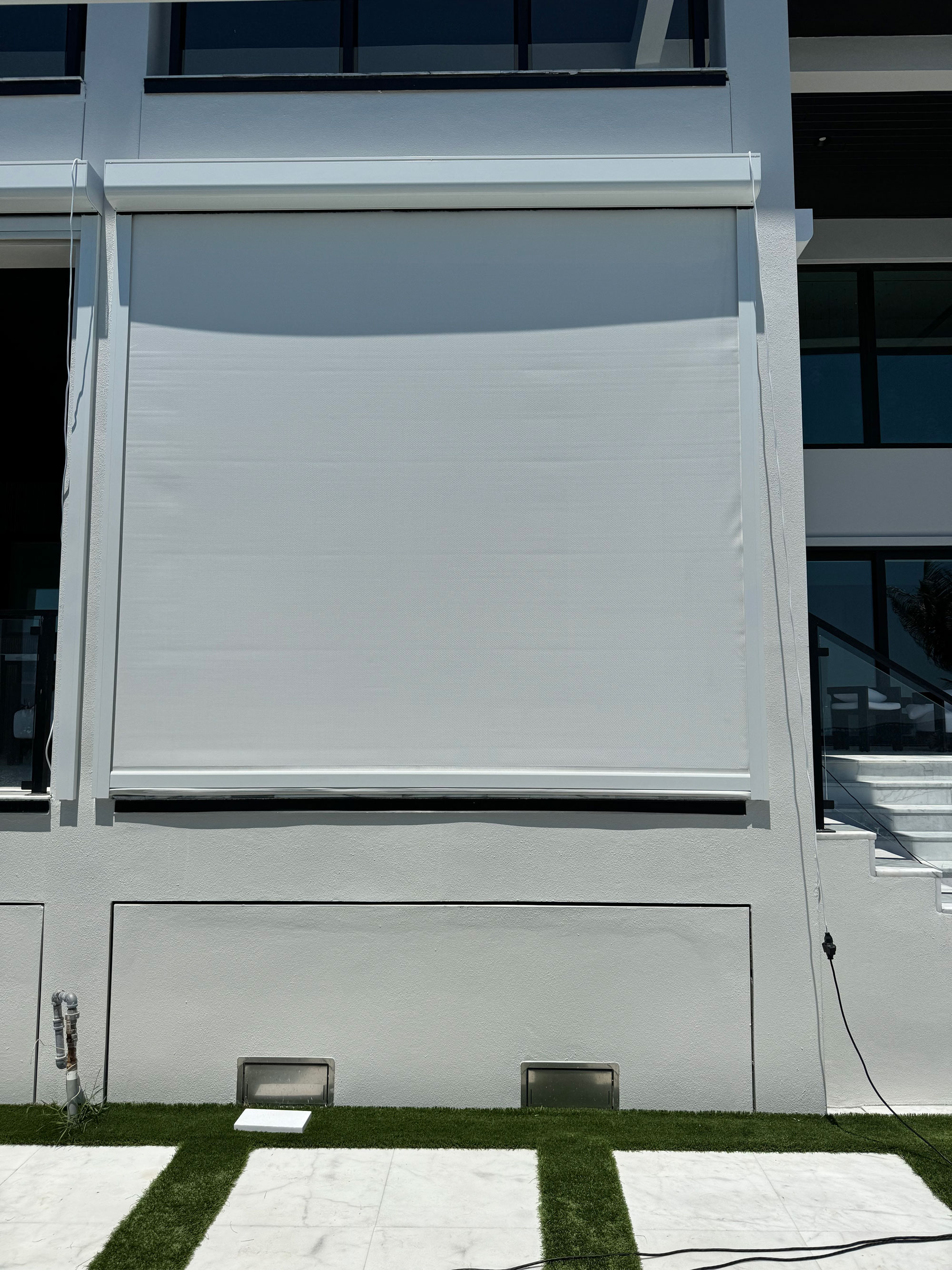
Exterior solar shades are one of the most effective ways to reduce airborne allergens on a lanai.
Unlike basic insect screens, solar shades create a denser filtering barrier that helps reduce:
At the same time, they still preserve:
For homeowners comparing fabric performance, see Patio Shade Fabrics Explained: Openness, Color, Heat.
Pollen conditions change throughout the day.
Levels are often highest:
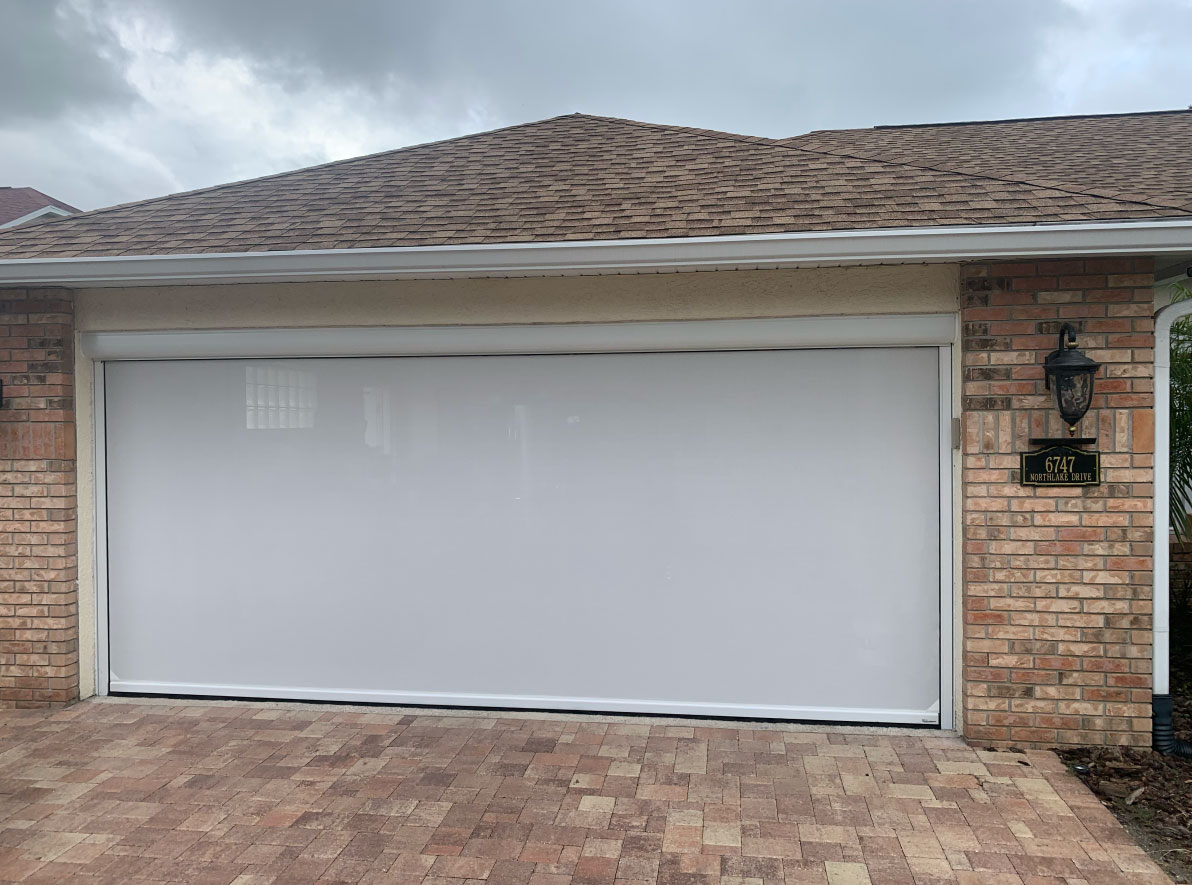
Motorized lanai screens allow homeowners to adjust exposure instantly.
Manual systems often stay open too long because adjusting them repeatedly becomes inconvenient.
Motorized systems allow:
Lower screens early when pollen counts peak.
Partially raise screens for ventilation when conditions improve.
Reduce insect and airborne debris exposure overnight.
Not all screen materials perform equally for allergy reduction.
Designed mainly for:
Less effective for:
More effective because they:
Denser mesh slightly reduces airflow compared to basic screening.
For allergy-sensitive households, the improvement in comfort is usually worth the tradeoff.
The best lanai shade systems reduce how airborne particles move through the space.
Most pollen enters lanais through:
Strategic screen placement reduces turbulence and particle circulation inside the lanai.
Permanent enclosure systems can trap:
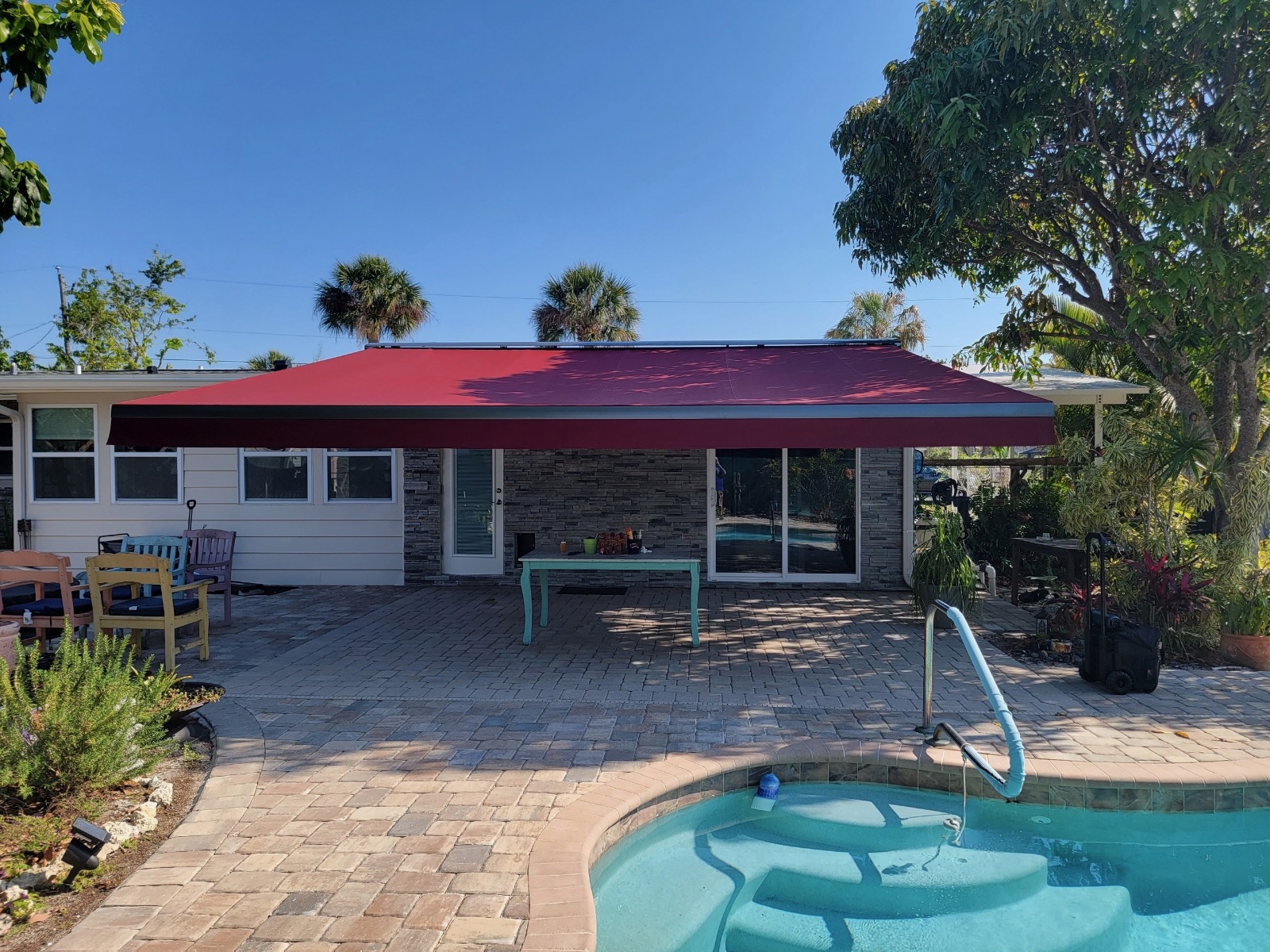
Retractable systems allow homeowners to balance:
Florida weather changes rapidly:
Retractable systems adapt more effectively to changing conditions.
For flexible outdoor comfort planning, see The Benefits of Motorized Retractable Shades for Tampa Bay Homes.
Direct sun exposure worsens outdoor discomfort during allergy season.
Heat and UV exposure increase:
Solar shades reduce:
This creates a more comfortable environment for allergy-sensitive individuals.
Many Florida allergy sufferers react more strongly to mold spores than pollen.
Lanais with poor airflow and excessive moisture encourage:
Completely sealing a lanai can worsen moisture problems if ventilation becomes insufficient.
Balanced airflow is critical.
Shade systems reduce airborne particles, but furniture materials also matter.
Reducing fabric surfaces lowers allergen accumulation significantly.
Fans improve comfort, but poor airflow direction can redistribute pollen.
Strong turbulent airflow keeps allergens suspended instead of allowing them to settle or exit naturally.
Shade color affects:
They:
The most effective lanai setups usually combine multiple layers.
Solar shade screen for pollen reduction
Interior seating arrangement with controlled airflow
Ceiling fans or perimeter ventilation adjustments
Each component solves a different issue:
Oversized lanais often have:
One fixed screen configuration rarely works perfectly all day.
Use zoned retractable screens:
This creates better comfort without fully closing the outdoor space.
Pollen-heavy lanais require constant maintenance without proper screening.
Exterior solar shades reduce how much airborne debris reaches these surfaces.
Waterfront airflow often carries both pollen and salt-heavy moisture.
Large open landscapes increase airborne pollen movement.
Nearby trees and grass create concentrated pollen exposure.
Humidity management becomes critical.
Standard mesh often does little for pollen reduction.
Poor airflow can worsen humidity and mold problems.
Pollen movement is heavily influenced by airflow patterns.
Open visibility matters, but comfort matters more.
Allergy conditions change constantly throughout the day.
Smart screen systems allow faster response to:
This creates more consistent comfort without constant manual adjustment.
For homeowners exploring integrated outdoor comfort systems, review Motorized Outdoor Screens vs. Traditional Screens.
The best lanai shade systems for allergy relief balance:
For most homes, the best overall solution combines:
The goal is not eliminating outdoor air completely. The goal is creating a cleaner, more comfortable outdoor environment that reduces airborne irritants while preserving the openness that makes lanais enjoyable.
When properly designed, allergy-focused lanai shading systems improve:
For professionally designed outdoor shade systems tailored to Florida lanais and outdoor living spaces, explore West Shore Shade.
Seen something you like?
Every West Shore Shade quote is done in person, because every opening is different. Tap what you’re interested in and answer a few quick questions so we arrive prepared. A real person from our Gibsonton showroom calls to set up your free visit.
Custom-measured, professionally installed, and backed by a 10-year motor warranty. No pressure, no obligation — just a straight answer on what your space needs.
Call (813) 252-6813Pick your product, leave your number, and we'll call to set a time. No pressure, no obligation.
A West Shore Shade specialist will call you shortly to set your free in-home estimate. Need us sooner? (813) 252-6813
Prefer to talk? (813) 252-6813
“From the first consultation to final installation, the experience was seamless. Our Tampa patio now feels like a luxury retreat.”
“The motorized screens work flawlessly and look amazing. The team was professional, punctual, and so easy to work with.”
“The quality is top-notch and the installation was quick and clean. Highly recommend West Shore Shades.”