Backed by a Lifetime Motor Warranty.
.svg)


Open concept homes with large glass walls create a completely different shading challenge compared to traditional layouts.
The same windows that make these homes feel expansive and modern can also create:
The issue is not the glass itself. The issue is controlling sunlight without destroying the openness that makes the space attractive in the first place.
The best interior shades for open concept homes do three things simultaneously:
For homeowners exploring custom solutions for large-window homes, see Motorized Interior Shades.
Traditional rooms can isolate sunlight to one area. Open concept homes cannot.
When large walls of glass connect:
The entire space becomes affected by changing sunlight conditions.
That means:
A shading system that works in a small enclosed room may fail completely in an open-concept layout.
The larger the glass area becomes, the more important:
Solar shades are usually the best starting point for homes with expansive glass walls.
They reduce:
Without completely blocking:
Open concept homes rely heavily on visual continuity. Heavy or opaque window treatments can make the space feel segmented and smaller.
Solar shades preserve:
Best for:
Best for:
For a deeper explanation of solar fabric performance, read Patio Shade Fabrics Explained: Openness, Color, Heat.
Large open-concept homes experience sunlight changes constantly throughout the day.
Manual adjustments become impractical because:
Motorized systems solve this by automating the adjustments.
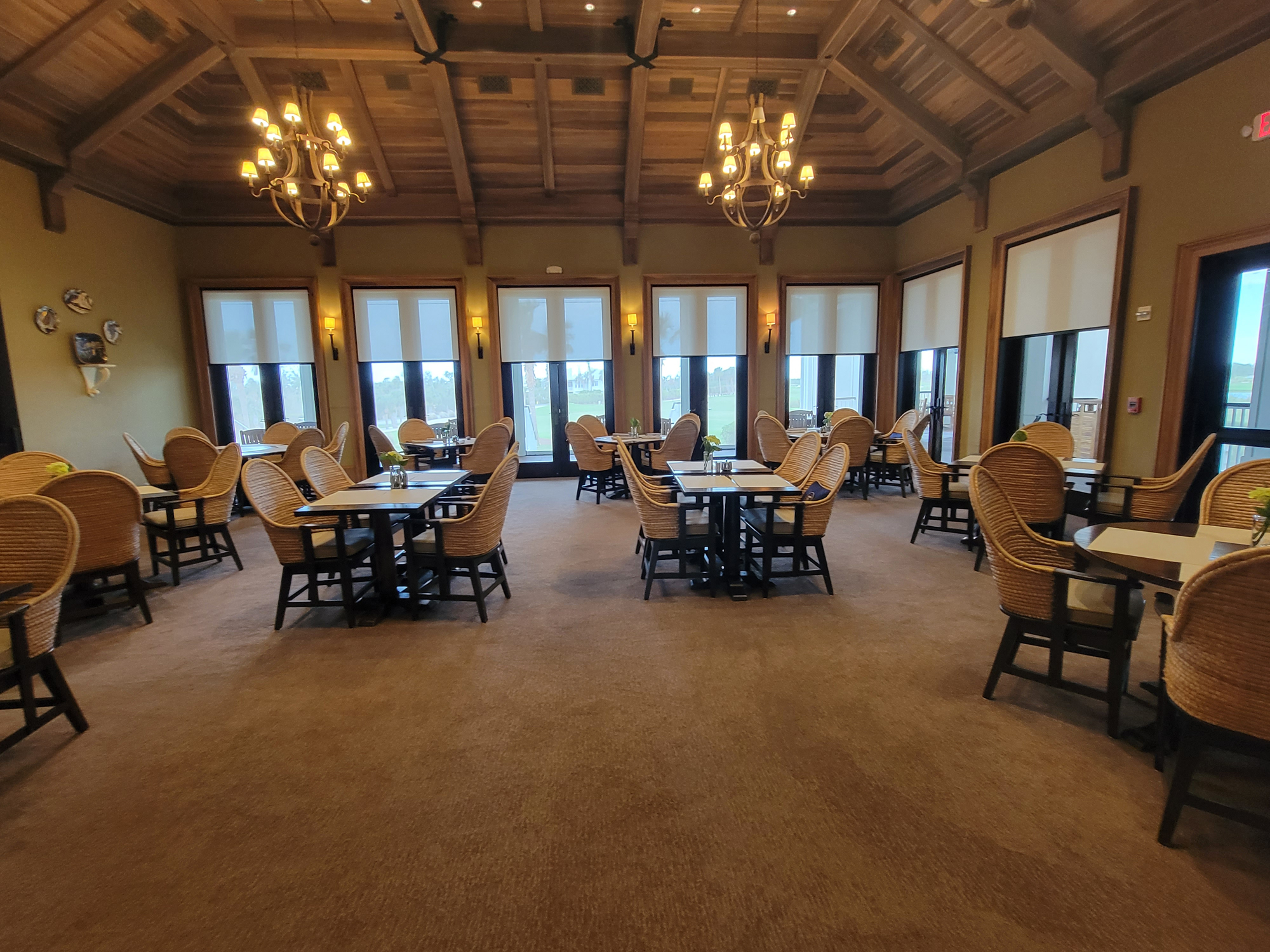
Open concept homes are usually designed around daylight.
Light filtering shades preserve that brightness while softening harsh direct sun.
Even in open concept homes, some areas need stronger light control.
Examples:
Room darkening shades help reduce:
Using room darkening shades across the entire open floor plan can make the home feel too heavy during daytime hours.
This is why zoning becomes important.
The biggest mistake homeowners make is treating the entire open-concept space as one lighting zone.
Different sections of the home experience sunlight differently.
Needs brightness and moderate glare control
Needs TV glare reduction and privacy
Needs softer ambient lighting
The best systems divide the home into controllable zones.
Motorized systems make zoning much easier to manage.
South-facing glass receives prolonged sunlight exposure throughout the day.
That creates:
West-facing glass walls create the harshest conditions in open-concept homes because afternoon sunlight is:
Afternoon conditions change rapidly. Automated systems respond more consistently than manual adjustments.
Open concept homes often struggle with uneven temperatures because glass transfers heat rapidly.
Cellular shades improve insulation by trapping air inside honeycomb-shaped pockets.
Cellular shades are visually bulkier than roller shades.
In highly minimalist homes, roller systems often maintain cleaner architectural lines.
Large glass walls amplify brightness dramatically.
The wrong shade color can create:
They diffuse sunlight more evenly while preserving openness.
Many open-concept homes feature:
These layouts create additional challenges:
The highest-performing open concept homes rarely rely on a single treatment layer.
Solar shades for daytime filtering
Room darkening shades or drapery for evening privacy
Each layer solves a different problem:
This creates much greater flexibility throughout the day.
Large glass walls create major nighttime visibility problems.
During daytime:
At night:
Automation becomes especially valuable for nighttime privacy management.
Interior shades manage sunlight after it enters the glass. Exterior systems stop solar heat before it reaches the window.
This is especially valuable in homes with:
Exterior solar screens + interior solar shades
For cooling-focused strategies, see Energy Savings With Exterior Shades in Hot Climates.
This often destroys the bright open feeling of the home.
Large glass walls dramatically increase indoor temperatures.
Different areas need different light control levels.
Beautiful interiors become uncomfortable when sunlight is unmanaged.
Large glass walls change lighting conditions constantly throughout the day.
For family-safe automation systems, see Child and Pet Safety With Cordless Motorized Shades.
The best interior shades for open concept homes with big glass walls balance:
For most homes, the best overall solution combines:
The larger the glass area becomes, the more important:
When properly designed, interior shades improve:
For professionally designed shading systems tailored to large-window modern homes, explore West Shore Shade.
Seen something you like?
Every West Shore Shade quote is done in person, because every opening is different. Tap what you’re interested in and answer a few quick questions so we arrive prepared. A real person from our Gibsonton showroom calls to set up your free visit.
Custom-measured, professionally installed, and backed by a 10-year motor warranty. No pressure, no obligation — just a straight answer on what your space needs.
Call (813) 252-6813Pick your product, leave your number, and we'll call to set a time. No pressure, no obligation.
A West Shore Shade specialist will call you shortly to set your free in-home estimate. Need us sooner? (813) 252-6813
Prefer to talk? (813) 252-6813
“From the first consultation to final installation, the experience was seamless. Our Tampa patio now feels like a luxury retreat.”
“The motorized screens work flawlessly and look amazing. The team was professional, punctual, and so easy to work with.”
“The quality is top-notch and the installation was quick and clean. Highly recommend West Shore Shades.”