Backed by a Lifetime Motor Warranty.
.svg)


Adding shade to a patio does not always mean building a permanent roof, tearing out concrete, or starting a full remodel. In many cases, the best patio upgrades are the ones that improve comfort quickly, fit the structure you already have, and avoid the cost, time, and disruption of major construction. That is especially true in Florida, where outdoor living is a huge part of daily life but sun, glare, heat, wind, and bugs can make a patio far less enjoyable than it should be.
A lot of homeowners assume they have only two choices. Either leave the patio open and deal with the heat, or commit to a big construction project. In reality, there is a middle path. Today’s patio shade options make it possible to add meaningful comfort, better light control, more privacy, and more usable hours to a space without rebuilding the entire structure.
This guide explains how to add shade to a patio without major construction, what options work best in different situations, and how to choose a solution that feels intentional rather than temporary. If you want to explore the main categories as you read, West Shore Shade’s live pages for motorized patio shades, motorized outdoor shades, motorized screens, and awnings are the most relevant starting points.
The desire to avoid a major build is not only about cost. It is often about flexibility, speed, and practicality.
Many patios already have enough of a frame, wall, or mounting surface to support an effective shade solution. The smart move is to work with what is already there.
Not every patio needs the same type of shade. Before choosing a product, identify the real comfort issue.
A lot of patios have more than one of these issues. The right solution depends on which one matters most.
One of the cleanest ways to add patio shade without major construction is with a motorized outdoor shade system mounted to the existing structure. These systems are designed to work with patios, pergolas, covered lanais, porches, and even some open-air layouts where the right attachment points already exist.
This makes them one of the best choices for homeowners who want a big comfort upgrade without changing the bones of the patio.
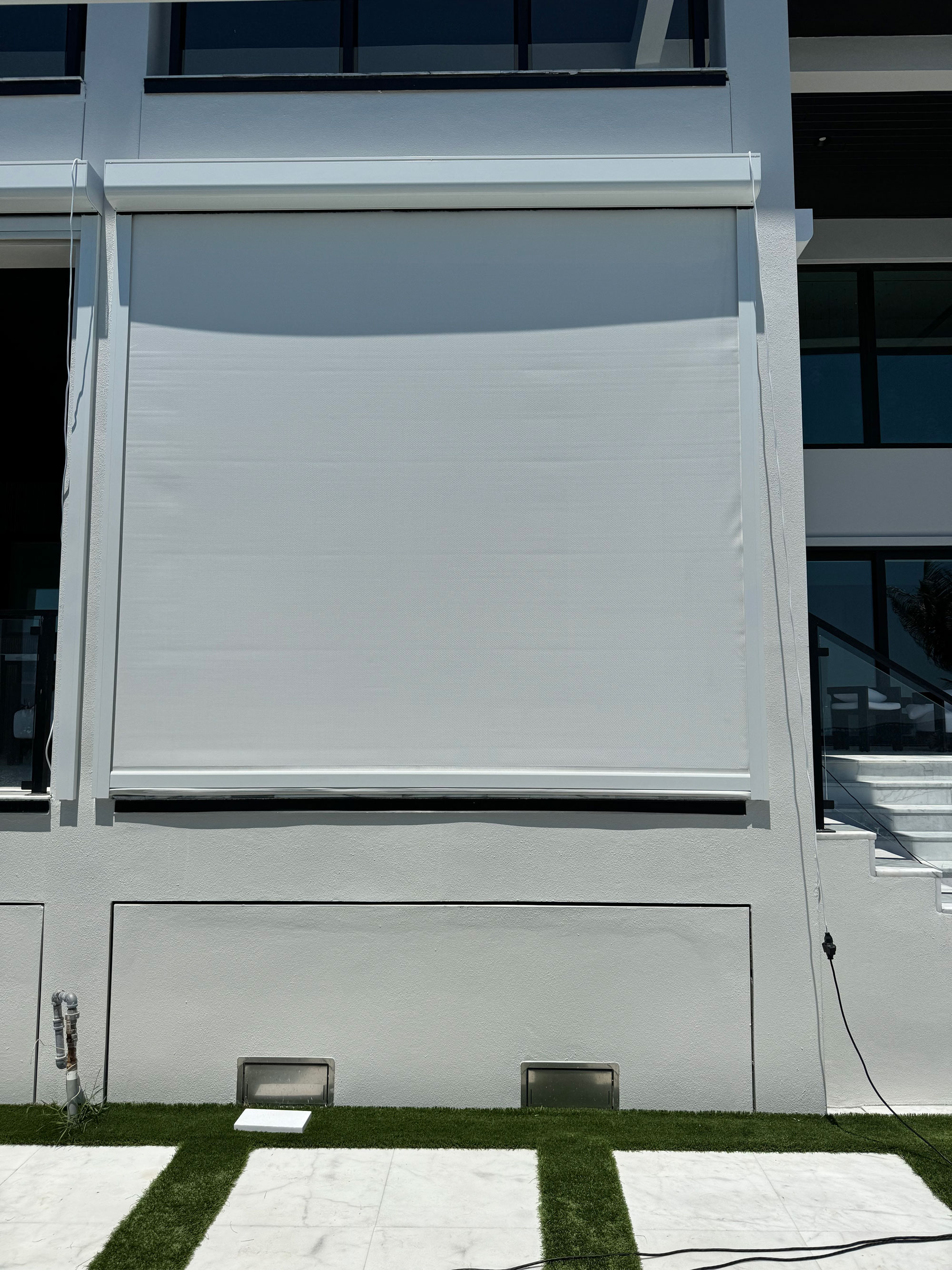
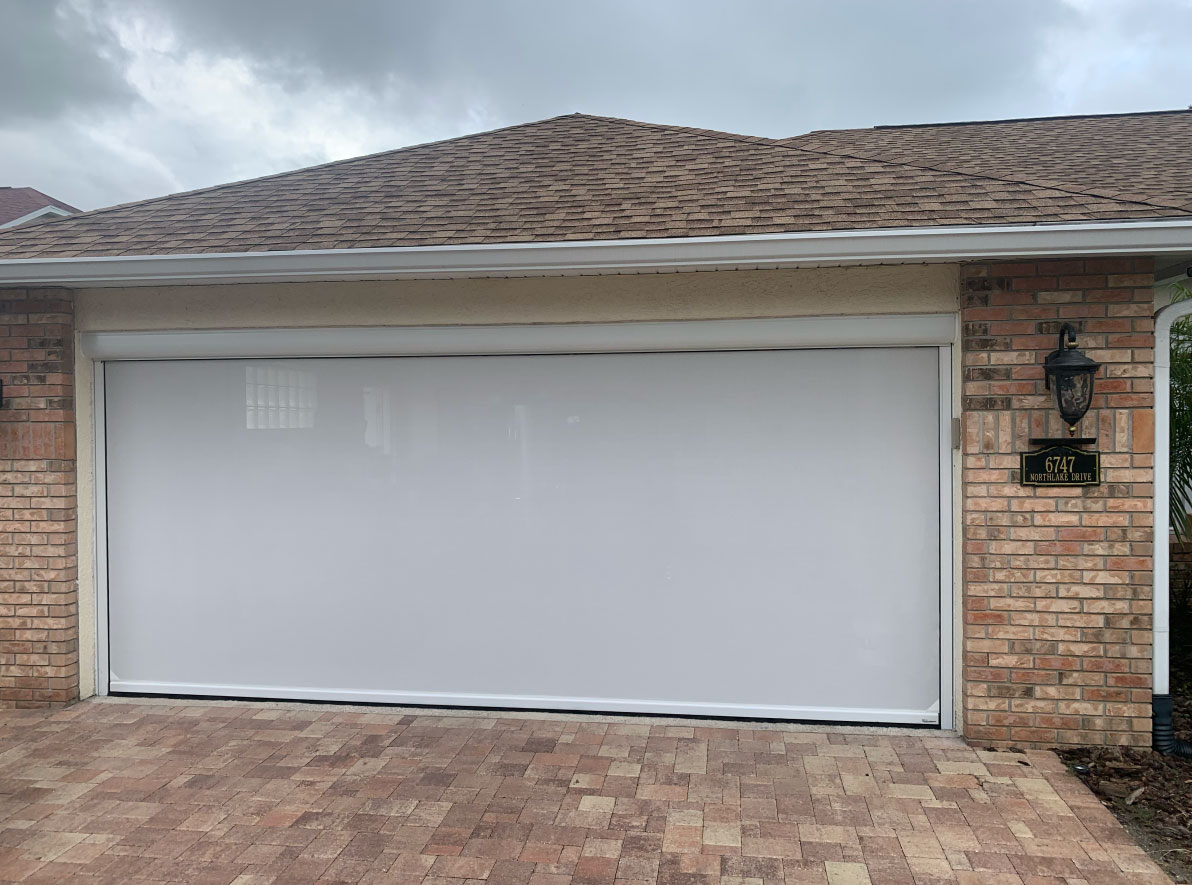
West Shore Shade’s motorized outdoor shades page shows how these systems are used on patios, pergolas, poolside spaces, and other exterior living areas.
Motorized patio shades are often ideal when the patio already has some overhead structure but still gets too much light, glare, or heat from the side.
The major advantage is flexibility. You can keep the patio open when conditions are pleasant, then lower the shade only when the sun becomes a problem. That means you are not permanently sacrificing light or view just to gain comfort during the worst hours.
For a closer look at this category, see motorized patio shades.
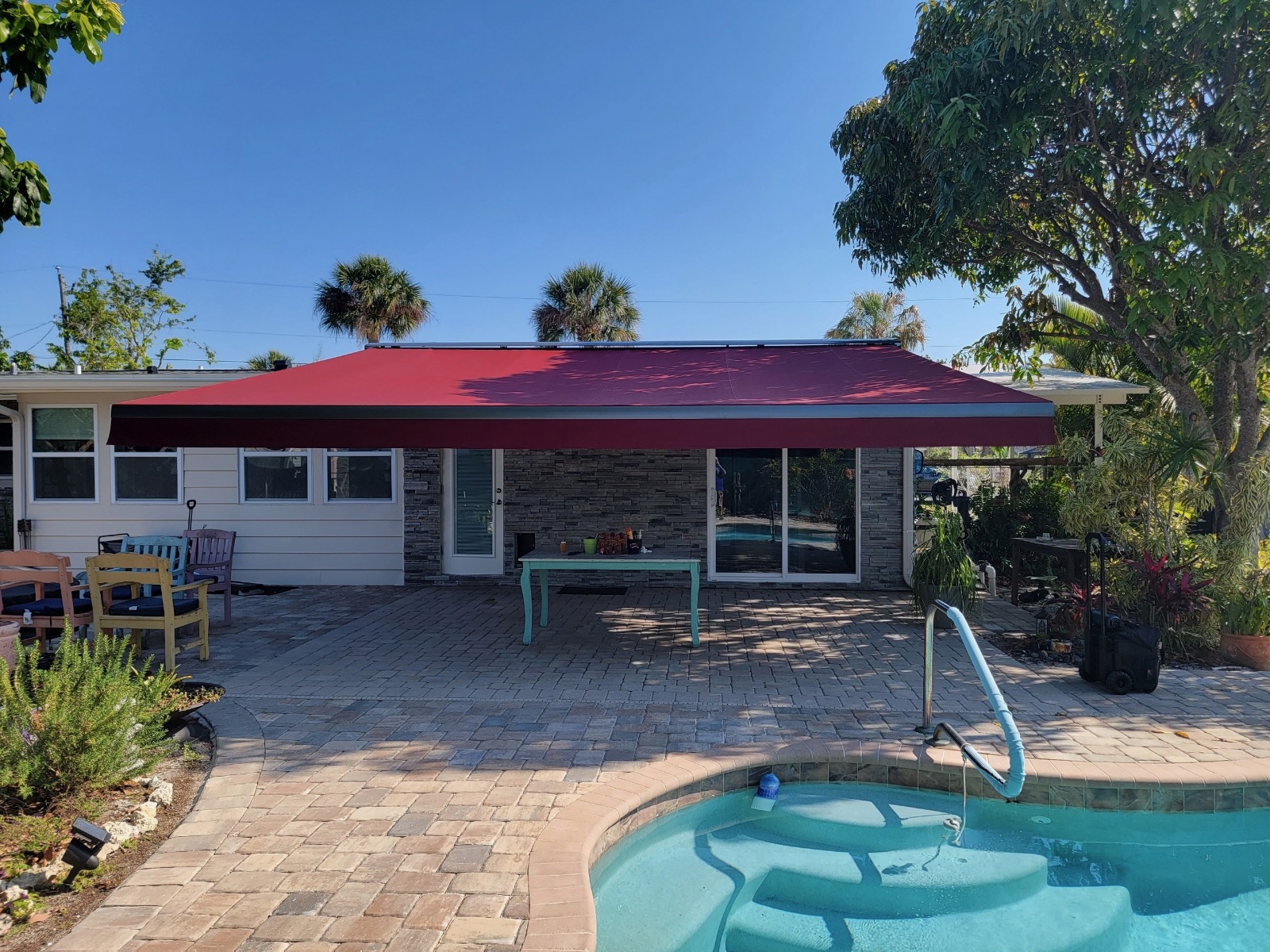
If your patio gets most of its heat from above, a retractable awning is often one of the best low-disruption upgrades. It gives you broad overhead coverage without the need to build a permanent roof extension.
Awnings are especially useful when your patio is open overhead and becomes uncomfortable during the middle of the day. Instead of rebuilding the patio cover, you add a shade layer that does the job with much less work.
West Shore Shade’s awnings page is the best live reference for this solution.
A lot of homeowners make the mistake of expecting one product to solve every patio issue. In reality, the best no-construction shade plan often combines two lighter upgrades rather than one oversized solution.
This layered approach usually feels more natural because it matches how the sun actually moves. Overhead shade helps during the brighter part of the day. Vertical shade helps when the sun gets lower. Screens and fabrics can also improve privacy and bug control without requiring a permanent enclosure.
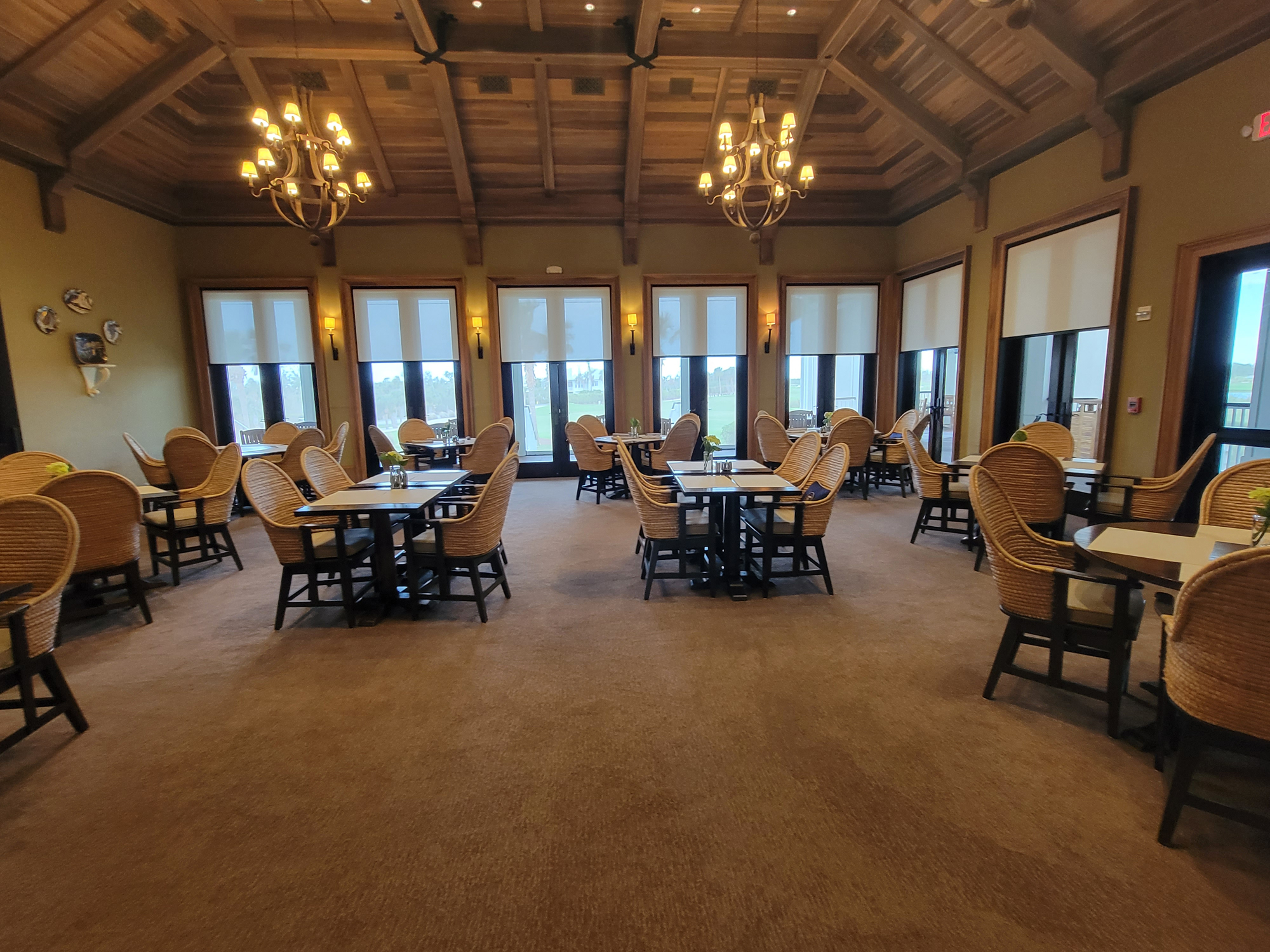
For homeowners comparing exterior and interior comfort strategies, interior shades can complement a patio plan, especially when large sliding doors or windows connect the patio to the home.
If your patio already has a pergola, you may be much closer to a good shade solution than you think. Many homeowners assume the pergola needs to be rebuilt or replaced to become comfortable. In reality, existing pergolas can often support retrofit shade systems.
This is a very smart way to avoid major construction. Instead of tearing out a pergola that already looks good, you add the comfort layer it was missing.
If you want inspiration from real installations, the our work page is useful because it shows how outdoor structures are transformed through screens, shades, and awnings rather than full rebuilds.
Homeowners often search for “easy patio shade” and end up looking at temporary or semi-temporary options first. These can work in some situations, but they come with tradeoffs.
For some patios, they are fine as a short-term experiment. But if your goal is a long-term upgrade that feels like part of the house, mounted motorized shades or awnings usually produce a much better result.
You do not need to cover the entire patio to make it dramatically more comfortable. In fact, one of the smartest ways to avoid major construction is to target the problem area instead of trying to transform the whole footprint.
A patio may only need one west-side drop shade, not a full enclosure. Or it may only need one well-placed awning over the dining area rather than coverage over the whole slab.
This targeted approach usually saves money, keeps the patio feeling open, and avoids overbuilding.
A lot of Florida patios are already usable in the morning. The real problem starts in the late afternoon when low western sun turns the space into a glare zone. This is one of the clearest examples of where major construction is often unnecessary.
If your patio feels fine at noon but unbearable at 5 pm, that is a sign you may need a targeted side-shade strategy rather than a new overhead structure.
A shade upgrade is not only about heat. It is often one of the fastest ways to improve privacy without fencing, walls, or major screening projects.
This is particularly valuable on patios in newer neighborhoods where homes are built close together. A well-positioned shade can create privacy exactly where you need it without changing the whole backyard.
When homeowners think about return on investment, they often focus only on resale. But comfort ROI matters too. A patio that is too hot to use is a space you paid for but do not really enjoy.
The best upgrade is usually the one that solves the problem with the least unnecessary work.
Adding shade without major construction is easier than rebuilding a patio, but there are still decisions that matter.
These questions help narrow the right system quickly.
A no-construction patio shade project can still go wrong if the product is chosen without a real plan. The most common mistakes are not structural. They are strategic.
Professional design matters because it helps match the product to the real problem. A good installer can walk the patio, observe sun angles, and recommend the least invasive solution that still delivers a strong comfort gain.
If you want help identifying which product category fits your patio best, the quickest place to start is the West Shore Shade products page, then move to contact us for a consultation.
If you want to make a smart decision without overcomplicating it, follow this order:
Identify the time of day when the patio becomes uncomfortable.
Figure out whether the problem is overhead sun, side glare, wind, bugs, or privacy.
Decide if the patio already has usable structure for mounting a screen, shade, or awning.
Choose the smallest effective upgrade that solves the actual problem.
Keep the system flexible and clean-looking whenever possible.
This usually leads to a better result than thinking in terms of “big project or no project.”
Most Tampa Bay patios can get real shade without new roofs or concrete work. Motorized outdoor shades mount to an existing lanai frame, beam or wall, and retractable awnings attach to the house to cover open patios. Matching the product to where your sun problem actually comes from is what makes the upgrade work.
Across Brandon, Riverview and Apollo Beach, many homes already have a covered patio or screened lanai. The roof handles midday sun, but strong west-facing afternoon sun still slips in low from the side. A vertical shade on that one side is often enough to make the space usable in the late afternoon, with no permits for structural work and very little disruption.
For open patios without a roof, a retractable awning gives overhead relief that you can pull back when summer thunderstorms build or when you want the evening sky. Because Tampa Bay humidity and frequent rain are hard on cheap shade sails and pop-up canopies, a system designed to retract and store protects your investment and keeps the patio looking clean.
In many cases, yes. Motorized shades and screens can often mount to a sound existing frame, beam or fascia. We check the structure during the in-home visit to confirm it can support the system, then recommend the cleanest mounting method for your lanai so no rebuilding is needed.
Many communities allow awnings and shades, but approval may be required before installation. Rules vary by neighborhood, especially in master-planned communities. Our team can help with product details, fabric color options and drawings so you have the documentation your architectural review board usually asks for.
The process starts with a free in-home visit where we measure and talk through options. Each system is then made to fit your openings. Installation itself is usually quick and clean because our own crew mounts to your existing structure instead of building something new.
Let us show you the simplest way to shade your patio. Schedule a free in-home consultation and we will measure, review your sun exposure and give you a quote in person after measuring. Explore motorized outdoor shades, call (813) 252-6813, or request your consultation online.
Free In-Home Estimate
Leave your name, phone and ZIP. Our local Gibsonton team will call to set up a free measure. No pressure, no obligation.
No pressure and no guesswork. One local team takes you from first call to final install.
Call (813) 252-6813 or send a quick form. Tell us what you want to shade and we will set a visit time that works for you.
We measure your space, bring real fabric and finish samples, and give you a detailed, no-obligation quote. Prefer to see it first? Walk into our Gibsonton showroom.
Our own crew installs. No subcontractors. Every job carries an itemized warranty, including a lifetime warranty on tubular motors.
Financing available through Enhancify. Serving Tampa Bay, Sarasota, Bradenton & Venice.
Seen something you like?
Every West Shore Shade quote is done in person, because every opening is different. Tap what you’re interested in and answer a few quick questions so we arrive prepared. A real person from our Gibsonton showroom calls to set up your free visit.
Custom-measured, professionally installed, and backed by a lifetime motor warranty. No pressure, no obligation — just a straight answer on what your space needs.
Call (813) 252-6813Pick your product, leave your number, and we'll call to set a time. No pressure, no obligation.
A West Shore Shade specialist will call you shortly to set your free in-home estimate. Need us sooner? (813) 252-6813
Prefer to talk? (813) 252-6813
“From the first consultation to final installation, the experience was seamless. Our Tampa patio now feels like a luxury retreat.”
“The motorized screens work flawlessly and look amazing. The team was professional, punctual, and so easy to work with.”
“The quality is top-notch and the installation was quick and clean. Highly recommend West Shore Shades.”