Backed by a Lifetime Motor Warranty.
.svg)


For homeowners across the Tampa Bay area—stretching from the waterfront properties of St. Petersburg and Clearwater to the inland family retreats of Brandon, Sarasota, and Bradenton—outdoor living is a defining aspect of daily life. Patios, lanais, and pool decks act as natural extensions of the home. However, living in Florida also means navigating a climate of extremes. The most prominent of these environmental challenges is the annual Atlantic hurricane season, which runs from June 1st through November 30th.
Adding custom motorized patio screens is one of the smartest ways to control solar heat, minimize water glare, and block swarming insects. Yet, because motorized screens are dynamic mechanical systems, they require a proactive management plan during Florida's active storm months.
Understanding how severe weather, extreme wind pressures, and post-storm debris affect your motorized screens will help you protect your home, preserve your equipment, and ensure your investment remains highly functional for years to come.
Houston Hurricane & Security Products
To understand how hurricanes and tropical storms threaten motorized patio screens, you must first understand wind physics. When a motorized screen is fully lowered across a patio opening, the fabric functions exactly like a massive sail on a boat. During high-wind events, millions of microscopic air molecules push against the fabric surface, creating immense lateral pressure.
Lexington Patio Screens
Most standard, non-impact-rated motorized screens are engineered to handle normal daily breezes of 20 to 30 mph. However, even a minor tropical storm can produce sustained winds of 40 to 50 mph, with severe hurricane gusts easily exceeding 100 mph.
Sun Shield Products+ 1
Without proper stabilization, wind pressures of this magnitude will cause standard screen fabric to billow wildly, pull completely out of its vertical side tracks, or tear at the seams.
+-------------------------------------------------------------+
|              The Sail Effect on Deployed Screens            |
+-------------------------------------------------------------+
|                                                             |
|       Wind Force (50+ mph) ====>   |  (Screen Fabric)       |
|                                    |                        |
|   * High lateral pressure bends the vertical tracks.        |
|   * Non-retained fabric "blows out" or tears at seams.      |
|   * Extreme load strains the mounting brackets and motor.   |
|                                                             |
+-------------------------------------------------------------+
To prevent structural failure, high-performance screen systems rely on advanced, track-locking designs. Zipper tracks and Keder-guided tracking keep the vertical edges of the screen continuously locked into the aluminum channels. This design distributes wind loads evenly down the entire length of the tracks, rather than concentrating the stress on the corners.
If you want to understand how different track-locking mechanisms manage wind forces and prevent screen blowouts, read our detailed comparison of the best stabilization for motorized screens.
Lexington Patio Screens
Unless you have invested in specialized, impact-certified ballistic hurricane screens, you must fully retract your motorized patio screens before a tropical storm or hurricane arrives. Leaving standard insect or solar shades deployed in hurricane-force winds is a guaranteed recipe for system failure and property damage.
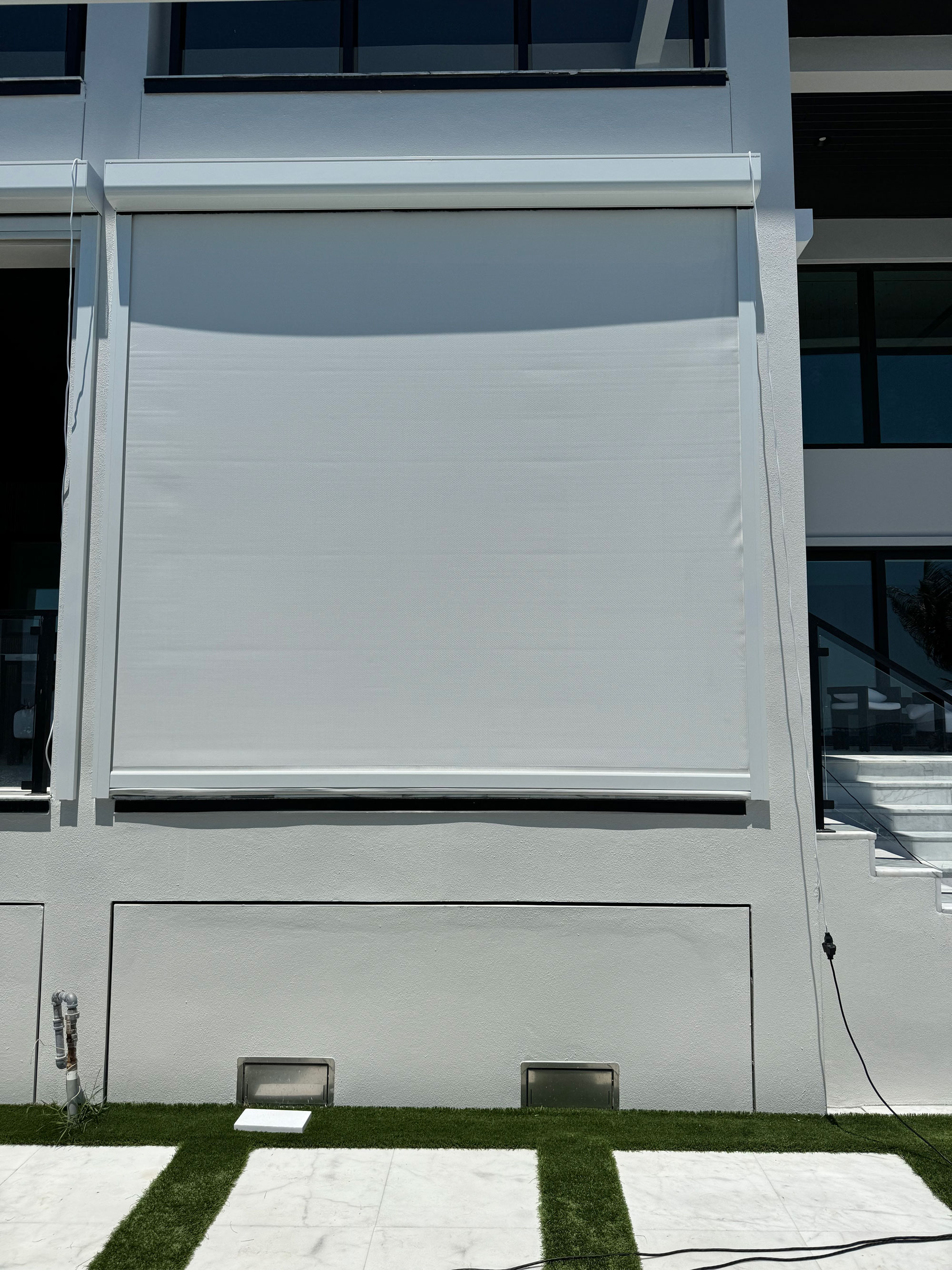
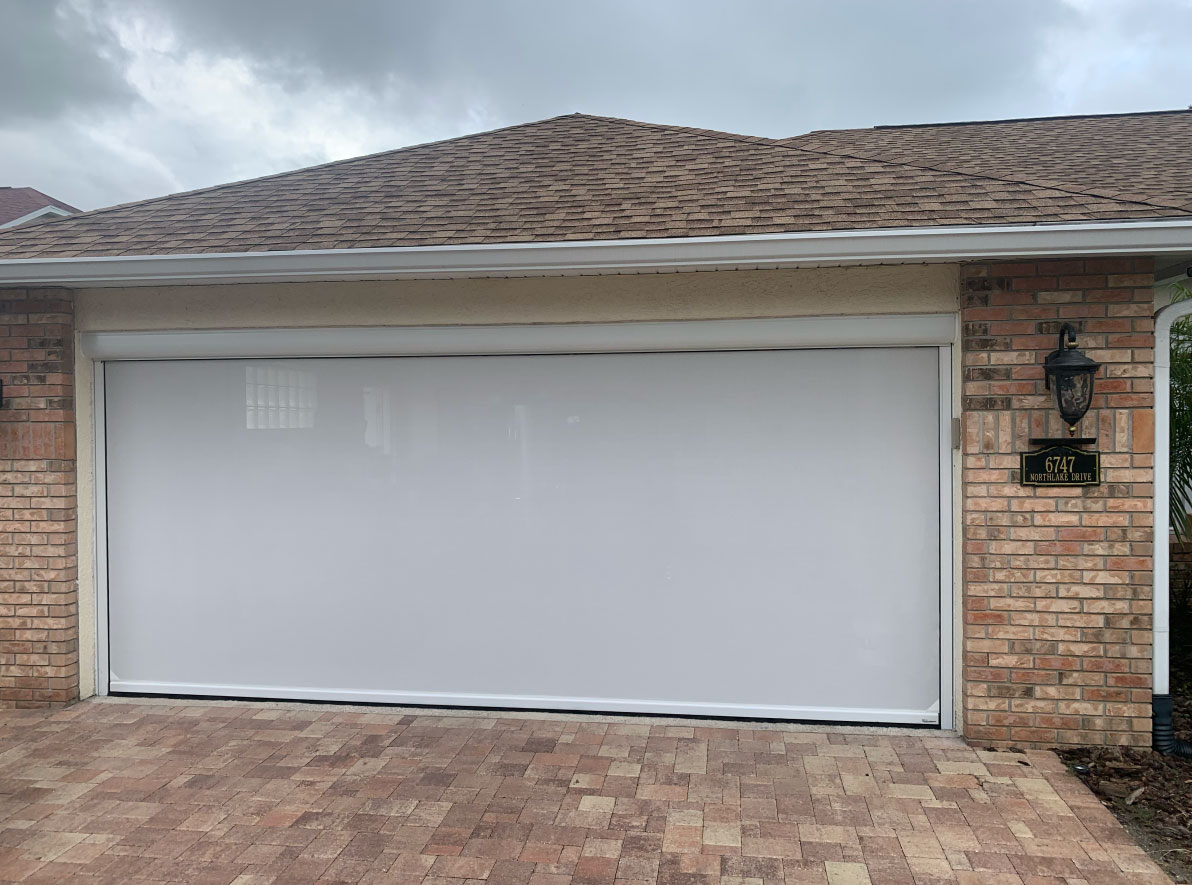
When you roll your screens up, the fabric coils tightly around the internal steel roller tube inside the protective overhead aluminum housing cassette. When retracted, the fabric is completely shielded from direct wind forces, flying debris, and driving rain.
Your Pre-Storm Retraction Checklist:
While major hurricanes usually come with days of advanced warning, Florida’s summer climate is also characterized by sudden, violent afternoon thunderstorms, microbursts, and straight-line winds. These localized storms can strike with very little warning, bringing wind gusts of 40 to 60 mph that can catch homeowners completely off guard.
If you are away from home when a sudden storm hits, you cannot manually retract your screens. This is where smart home automation and digital weather sensors become vital safeguards.
Eastern Metal Supply
Modern motorized systems can be integrated with wireless wind sensors (such as Somfy or Elero). These sensors continuously monitor wind speeds; if gusts exceed a pre-set safety threshold (usually 25 to 30 mph), the sensor overrides manual commands and automatically rolls the screens up into their protective housings.
Lexington Patio Screens+ 1
+-------------------------------------------------------------------------+
|                  How Automated Wind Protection Works                    |
+-------------------------------------------------------------------------+
|   [Wind Sensor]  ===> Detects Gusts Exceeding 25-30 MPH ===> [Control Box] |
|                                                                     |
|   [Control Box]  ===> Triggers High-Torque Motor       ===> [Retracts]     |
+-------------------------------------------------------------------------+
Integrating your outdoor shades into a smart, sensor-driven network gives you peace of mind during Florida’s unpredictable wet season. To explore how to set up automatic triggers, weather sensors, and mobile controls, check out our guide on smart control options for motorized outdoor shades.
Even if you successfully retract your screens before a storm, the intense wind and rain of a hurricane or tropical storm will coat your patio columns, tracking channels, and screen housings in dirt, salt spray, organic debris, and silt.
One of the most common mistakes homeowners make after a storm is immediately lowering their screens without inspecting and cleaning the system first. If you roll down the fabric while the track channels are caked in mud, sand, or salt crystals, those particles will grind against the gliding components, tear the zipper tracking, and scratch the powder-coated aluminum finish.
+-------------------------------------------------------------+
|              Post-Storm Cleaning & Inspection Flow          |
+-------------------------------------------------------------+
|                                                             |
|   [Step 1] Inspect tracks & housing for debris.             |
|   [Step 2] Wash away salt & silt with a garden hose.        |
|   [Step 3] Clear physical blockages from bottom tracks.     |
|   [Step 4] Lower the fabric slowly to check alignment.      |
|   [Step 5] Wipe down fabric & allow to dry completely.      |
|                                                             |
+-------------------------------------------------------------+
Once it is safe to venture outside, inspect your motorized shade system before restoring power:
By taking a few minutes to clean your system after a major weather event, you prevent premature motor wear and tear. For a step-by-step cleaning and care checklist, refer to our comprehensive maintenance guide for outdoor shades and screens.
The environmental stress on your outdoor motorized screens doesn't end when a storm passes. The weeks following a tropical system are often characterized by extreme humidity, standing water, and high saltwater concentration in the air—especially on coastal properties.
If your screens are built with cheap materials, they will quickly degrade in this highly corrosive environment. When planning an outdoor shade upgrade, you must prioritize durable, marine-grade components:
Eastern Metal Supply
Sun Shield Products
Storm Smart
The physical weight, color, and weave density of your screen fabric play a massive role in how well the material handles tension, humidity, and sun glare. To learn how to select the right material for your property, read our guide to patio shade fabrics explained: openness, color, heat.
While hurricane season demands careful planning and respect, the temporary threat of storms should not discourage you from upgrading your patio. When properly maintained, motorized patio screens provide incredible daily benefits that far outweigh the occasional task of rolling them up for a storm.
The Recovery Room
In fact, motorized screens are essential tools for managing Florida’s extreme year-round weather. They block up to 95% of solar heat during the summer, shield your family from seasonal bug swarms, and protect your home from energy loss. Shading your sliding glass doors and large windows during hot afternoons reduces the greenhouse effect, allowing your home's air conditioning system to run more efficiently and lowering your monthly cooling bills.
The Recovery Room
To see how motorized screens improve your home across all four seasons, explore our resource on the year-round benefit of motorized screens.
Progressive Screens
Designing a motorized screen system that can withstand Florida's challenging weather requires precise engineering. If the support tracks are mounted onto weak columns, or if the overhead header isn't properly anchored, even mild tropical winds can rip the brackets out of the wall.
Professional, factory-certified installers evaluate your home's wind exposure, structural framing, and electrical routing to ensure your screen housing is securely mounted. When you work with professional installers, you ensure that all components are aligned, square, and built to withstand the demands of the coastal climate.
Florida's hurricane season is a powerful reminder of the importance of choosing durable home additions. Motorized patio screens are an exceptional way to reclaim your outdoor living space, provided you plan for high winds and stormy weather.
Houston Hurricane & Security Products
By retracting your screens before a storm, using automated wind sensors, and performing routine post-storm cleaning, you can protect your equipment from severe weather damage.
Lexington Patio Screens
If you are ready to upgrade your backyard with heavy-duty, professionally engineered motorized screens, contact our experienced local team today to schedule your custom on-site consultation.
No pressure and no guesswork. One local team takes you from first call to final install.
Call (813) 252-6813 or send a quick form. Tell us what you want to shade and we will set a visit time that works for you.
We measure your space, bring real fabric and finish samples, and give you a detailed, no-obligation quote. Prefer to see it first? Walk into our Gibsonton showroom.
Our own crew installs. No subcontractors. Every job carries an itemized warranty, including a lifetime warranty on tubular motors.
Financing available through Enhancify. Serving Tampa Bay, Sarasota, Bradenton & Venice.
Seen something you like?
Every West Shore Shade quote is done in person, because every opening is different. Tap what you’re interested in and answer a few quick questions so we arrive prepared. A real person from our Gibsonton showroom calls to set up your free visit.
Custom-measured, professionally installed, and backed by a lifetime motor warranty. No pressure, no obligation — just a straight answer on what your space needs.
Call (813) 252-6813Pick your product, leave your number, and we'll call to set a time. No pressure, no obligation.
A West Shore Shade specialist will call you shortly to set your free in-home estimate. Need us sooner? (813) 252-6813
Prefer to talk? (813) 252-6813
“From the first consultation to final installation, the experience was seamless. Our Tampa patio now feels like a luxury retreat.”
“The motorized screens work flawlessly and look amazing. The team was professional, punctual, and so easy to work with.”
“The quality is top-notch and the installation was quick and clean. Highly recommend West Shore Shades.”