Backed by a Lifetime Motor Warranty.
.svg)


Hot Florida afternoons can turn certain rooms into bright, overheated spaces long before the thermostat says anything is wrong. West-facing and south-facing windows often take the worst of it. Sun pours through the glass, glare bounces off floors and countertops, and the area near the window feels noticeably warmer than the rest of the home. That is why window awnings remain one of the most practical exterior shade solutions for Florida homes. They block sunlight before it reaches the glass, reduce heat gain, and help windows work better instead of becoming hot spots. West Shore Shade installs custom awnings for homes and businesses across the Tampa Bay and West Central Florida region, with an emphasis on comfort, heat reduction, and long-term performance in Florida weather.
The reason window awnings matter so much in Florida is simple. Outdoor shade works best when it stops the sun outside the house, not after it has already passed through the glass. West Shore Shade’s Florida shade guide makes that exact point by emphasizing that effective outdoor shade systems improve comfort, protect finishes, and extend how long spaces stay usable throughout the day. Window awnings are one of the cleanest ways to do that on the exterior of a home, especially when the goal is to cool specific sunny rooms without enclosing a patio or changing the look of the whole house.
This article breaks down what makes a window awning “best” for Florida afternoons, which styles work well on different parts of the home, how to think about projection and placement, and when a homeowner should choose a window awning instead of a different shade product. It also explains how window awnings can fit into a broader exterior comfort plan alongside other West Shore Shade products such as motorized screens, motorized patio shades, and interior shades. Those links point to live pages on the current West Shore Shade site.
Florida afternoon sun is not just bright. It is persistent, humid, and often paired with reflective surfaces such as light-colored stucco, pool decks, driveways, water, and neighboring structures. When sunlight strikes a window directly, the glass heats up and the room behind it starts to feel that load. Even if the rest of the house feels fine, a living room chair near a sunny window or a kitchen counter under a west-facing opening can become uncomfortable fast. Exterior shading changes that experience because it intercepts the sunlight before it hits the glass. That is one reason West Shore Shade positions awnings as heat-reducing, comfort-enhancing exterior products built for Florida conditions.
Afternoon exposure is especially punishing on west-facing windows. The sun is lower in the sky than it is at noon, so glare hits more directly and deeper into the room. It is also the time of day when people are more likely to be home and actually trying to enjoy the space. A family room, office, or dining nook that seems fine in the morning may feel washed out and hot by 4:30. A properly sized window awning can dramatically cut that late-day load by giving the window a roofline of its own.
The best window awning is not the biggest one or the boldest one. It is the one that matches the window’s sun exposure, the home’s architecture, and the homeowner’s actual comfort problem.
A good Florida window awning should do five things well. First, it should block direct overhead and angled sun before that light hits the glass. Second, it should fit the scale of the window and the home instead of looking like an afterthought. Third, it should hold up to Florida’s heat, humidity, and regular weather changes. Fourth, it should reduce glare and heat without making the home feel dark or closed off. Fifth, it should be installed as a real exterior system, not as a decorative accessory that looks good for a month and then starts to feel flimsy. West Shore Shade’s awnings page makes clear that its awning solutions are intended to enhance comfort, reduce heat, and perform well in Florida’s demanding climate, which is exactly the performance standard homeowners should be looking for.
That means the “best” awning for one home may not be the best for another. A front-facing office window that gets blasted every afternoon may need a different projection and fabric than a bedroom window that gets partial sun or a side window protected by landscaping. Window awnings work best when they are treated as a custom solution, not a one-size-fits-all accessory.
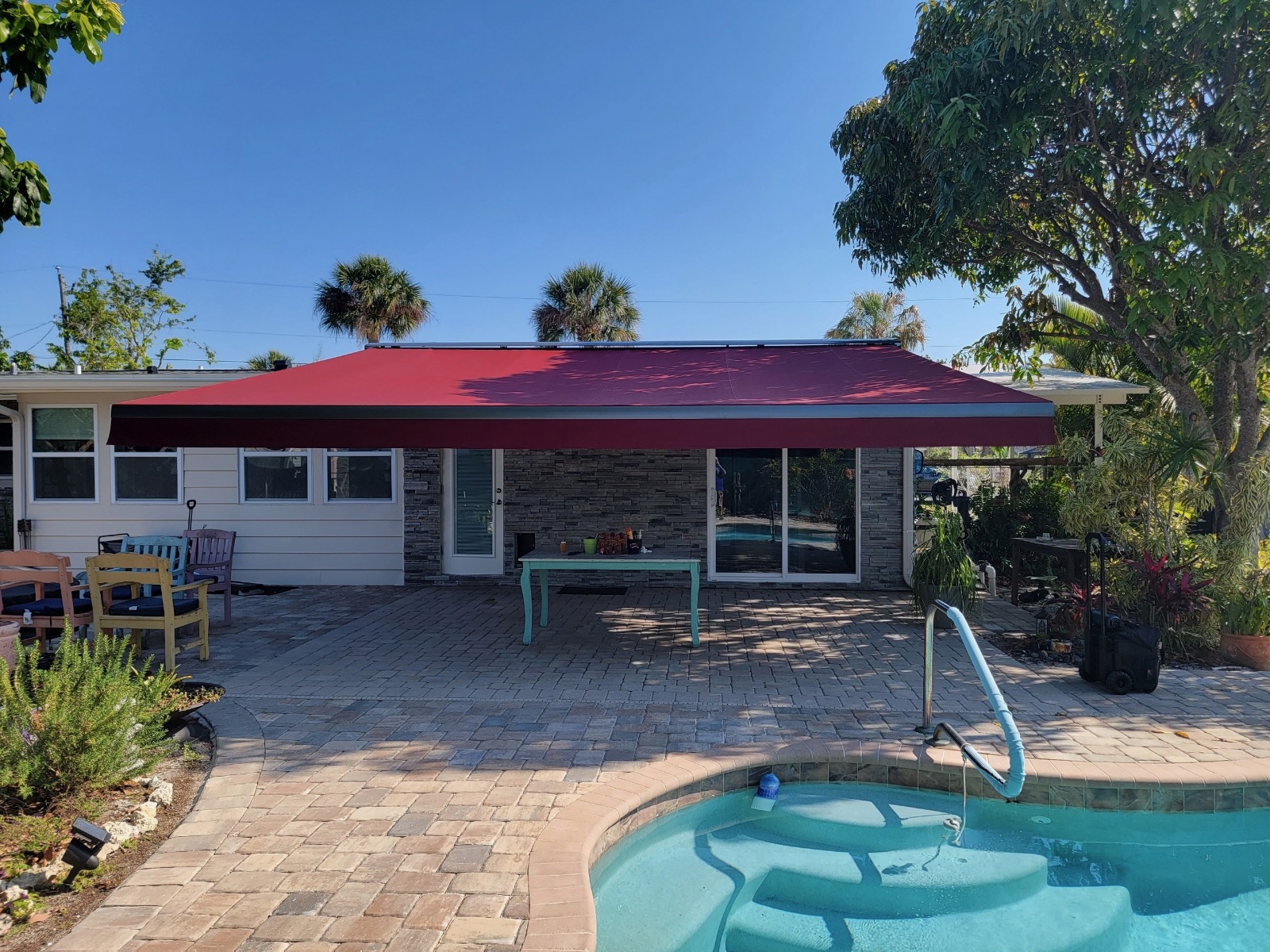
When homeowners think about awnings, they often picture patio systems first. Window awnings are a more focused application. They are there to solve a specific solar problem around a specific opening. That usually makes a more architectural, always-there appearance the right choice visually, even when the product itself is part of a broader retractable awning family or custom system.
What matters most is consistent window protection. A patio awning supports outdoor living. A window awning supports indoor comfort. It cuts solar exposure on the room behind the glass, protects trim and finishes, and reduces that hot bright patch that often forms on the floor or furniture beneath the window. For homeowners comparing styles and broader awning options, the live awnings page is the best current reference on the West Shore Shade site.
Not every window in the home needs an awning. The best candidates are usually the ones that create the most discomfort or the biggest energy load.
These are often the number one priority in Florida homes. Afternoon glare is strong, and the room is usually in active use during the hottest part of the day. A window awning here helps control brightness, lower the temperature near the glass, and make the room feel more even and livable.
Kitchens already run warm from cooking and appliance use. Add constant sun through a south-facing window and the room can become uncomfortable quickly. A well-sized awning helps cut that constant load.
If a desk sits near a bright window, glare can affect screens, productivity, and eye comfort. Exterior shading reduces the need to over-correct from inside with heavy blinds or blackout treatments.
Bedrooms that heat up in the afternoon can hold that heat well into the evening. A window awning can support better comfort before interior shades even come into play.
When a front entry includes sidelights or decorative glass, a small window awning strategy can also support the comfort and weather protection benefits of a door awning solution. West Shore Shade’s awning offerings are positioned for both residential and business applications, which makes them useful for these smaller but still high-impact entry conditions.
Width matters, but projection is where window awnings really earn their value. Projection is the distance the awning extends outward from the wall. Too little projection and the awning may still look attractive, but it may not stop enough afternoon sun to meaningfully change comfort. Too much projection and it can feel visually heavy or mismatched to the opening.
The right projection depends on three main things: the height of the sun during the worst exposure period, the height of the window, and how far into the room the sun is penetrating. In Florida, the best-performing window awnings are usually the ones sized with actual afternoon conditions in mind, not just symmetry on the wall. A window that gets hard west sun needs more thoughtful shading than a similar-sized opening on the east side of the house.
This is one reason professional measurement matters so much. The awning should not simply “fit the window.” It should solve the heat and glare problem created by that window.
Because window awnings are smaller than patio awnings, some homeowners assume fabric and finish choices are mostly cosmetic. They are not. Color and material affect how the awning looks against the house, how much brightness it reflects, and how well it holds up over time.
In Florida, good awning choices tend to prioritize durability, mildew resistance, and a finish that stays attractive in strong sunlight. On the visual side, neutral tones often work best because they integrate more easily with the home exterior and make the awning feel intentional rather than trendy. A dramatic stripe can work on the right home, but most homeowners who want long-term satisfaction choose something timeless and coordinated.
If the window awning is part of a broader exterior shade plan, it is smart to coordinate its look with other visible products on the home. For example, a homeowner may choose a front-facing awning in a tone that relates well to nearby motorized screens or a rear motorized patio shade installation.
One reason window awnings remain popular is that they solve a comfort problem while also adding architectural depth. On many Florida homes, windows can look flat and exposed under hard sun. Awnings create dimension. They cast shadow lines, frame openings, and make the elevation feel more finished.
This matters even more on homes that have broad sunny façades. Repeating awnings across the right set of windows can make the house look more balanced and custom. On smaller homes, they can add character. On larger homes, they can make certain elevations feel less stark and more livable.
West Shore Shade’s project gallery shows how its installed systems contribute to both comfort and visual improvement across homes and businesses in West Central Florida. That same design thinking applies to window awnings, even when they are used on a smaller scale than full patio systems.
Window awnings and interior shades are not competing products. They solve related but different problems.
Interior shades are excellent for privacy, decorative control, and final tuning of light levels inside the room. But by the time interior shades are doing the work, the sunlight has already hit the glass. Exterior awnings stop much of that exposure before it enters the home at all.
That means many homes benefit from a layered approach:
West Shore Shade offers both exterior awnings and interior shade solutions, which makes that layered strategy especially practical for homeowners who want full control over how a room feels in the afternoon.
Sometimes homeowners start by thinking they need a patio solution when the real issue is a few harsh windows. Other times, they think window awnings will solve everything when the actual problem is a patio or lanai opening that is throwing glare and heat toward the house.
Window awnings are especially effective on homes with:
They can also be a smart fit for homes in neighborhoods where full exterior patio modifications are not practical, but targeted window shading is still allowed and highly beneficial.
Because West Shore Shade serves a broad range of Florida communities, from coastal locations like St. Petersburg, Clearwater, and Sarasota to inland areas such as Tampa, Wesley Chapel, and Plant City, the company is already positioned around the kinds of climates and sun conditions where these awning applications make the most sense.
The most common window awning mistakes are not usually about product failure. They are planning mistakes.
An awning can look great and still underperform if the projection is too shallow for the sun angle.
The awning should be sized for the comfort problem inside, not just the trim pattern outside.
A window awning should feel integrated, not bulky.
Different exposures need different strategies. Not all windows need the same awning size or even an awning at all.
Because window awnings affect heat, light, and exterior appearance at the same time, a good measurement and design process usually produces a much better result than guesswork.
The best window awnings for hot Florida afternoons are the ones that do three things at once: block harsh sun before it hits the glass, make the room behind the window more comfortable, and improve the look of the home rather than cluttering it. They work especially well on west-facing and south-facing windows, on entries that overheat, and on living spaces that get washed out in late-day glare.
They are not just decorative accessories. They are targeted exterior comfort tools. And when they are measured well, matched to the home, and installed professionally, they can make a room feel significantly better every day while also strengthening curb appeal.
If you want help choosing the right window awning for your home, the best next step is to visit West Shore Shade and reach out through Contact Us for a consultation.
Free In-Home Estimate
Leave your name, phone and ZIP. Our local Gibsonton team will call to set up a free measure. No pressure, no obligation.
No pressure and no guesswork. One local team takes you from first call to final install.
Call (813) 252-6813 or send a quick form. Tell us what you want to shade and we will set a visit time that works for you.
We measure your space, bring real fabric and finish samples, and give you a detailed, no-obligation quote. Prefer to see it first? Walk into our Gibsonton showroom.
Our own crew installs. No subcontractors. Every job carries an itemized warranty, including a lifetime warranty on tubular motors.
Financing available through Enhancify. Serving Tampa Bay, Sarasota, Bradenton & Venice.
Seen something you like?
Every West Shore Shade quote is done in person, because every opening is different. Tap what you’re interested in and answer a few quick questions so we arrive prepared. A real person from our Gibsonton showroom calls to set up your free visit.
Custom-measured, professionally installed, and backed by a lifetime motor warranty. No pressure, no obligation — just a straight answer on what your space needs.
Call (813) 252-6813Pick your product, leave your number, and we'll call to set a time. No pressure, no obligation.
A West Shore Shade specialist will call you shortly to set your free in-home estimate. Need us sooner? (813) 252-6813
Prefer to talk? (813) 252-6813
“From the first consultation to final installation, the experience was seamless. Our Tampa patio now feels like a luxury retreat.”
“The motorized screens work flawlessly and look amazing. The team was professional, punctual, and so easy to work with.”
“The quality is top-notch and the installation was quick and clean. Highly recommend West Shore Shades.”